




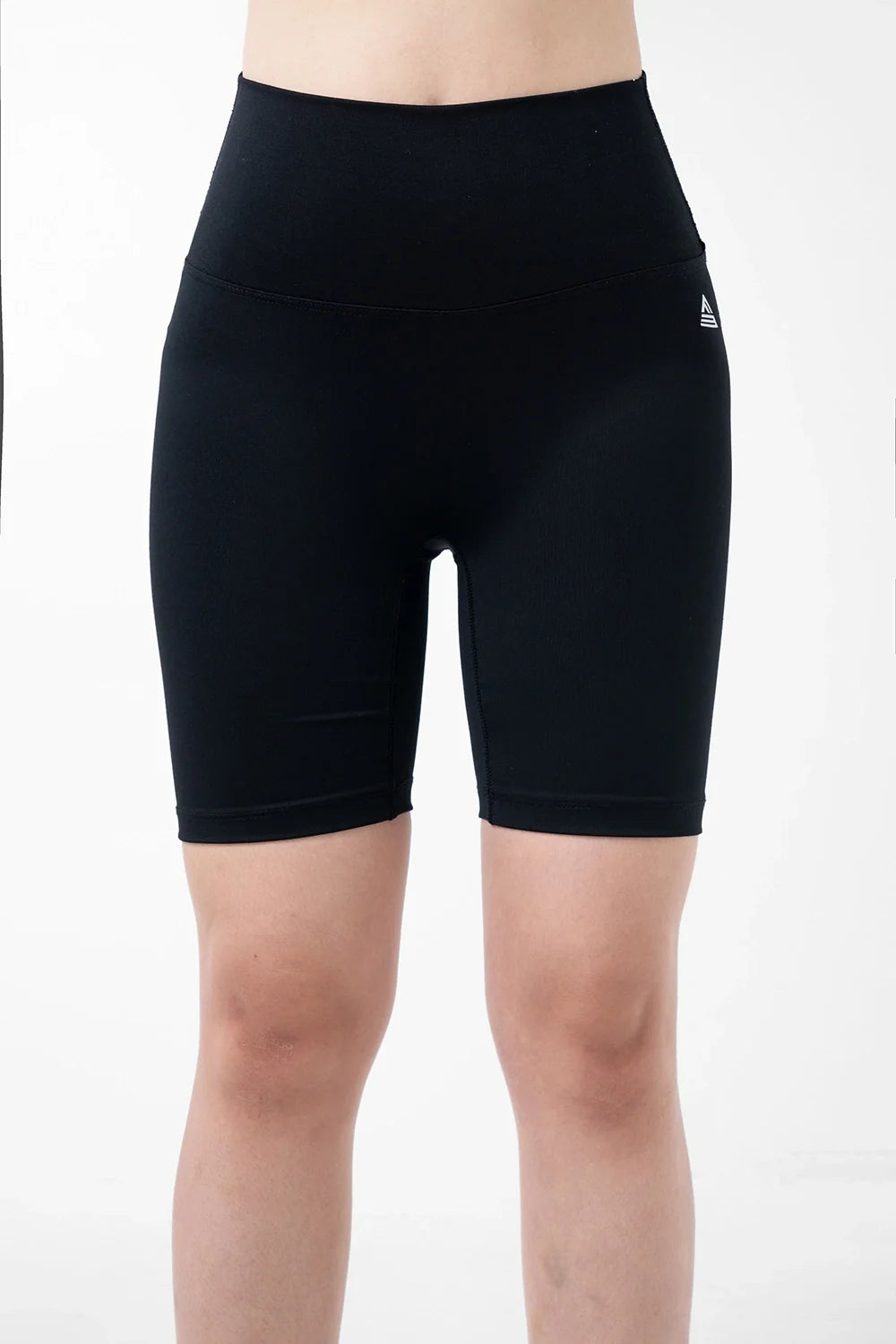
Wearing the wrong legging size is the #1 reason for waistband rolling, sheerness, or slipping during a workout — choosing correctly only requires your height, weight, and an understanding of the compression fit of leggings. In short: enter your height and weight into the “Find My Size” button on the product page, measure your hip circumference for better accuracy, and if you are between two sizes, choose the smaller size for better support and lift.
Use the “Find My Size” button to choose correctly
Fitme determines legging sizing based on height and weight, so you don’t have to take many measurements. Every product page has a “Find My Size” button — here is how to use it:
- Mandatory: enter your height (cm) and weight (kg).
- Optional (for better accuracy): measure your hips (at the fullest part, with the tape measure parallel to the floor) and enter it in the third box — useful if you have fuller hips or toned thighs.
The tool automatically compares your info against the specific size chart for that model and returns the appropriate size, so you don’t need to look up charts manually.
Reference Size Chart (Quick Comparison)
The table below shows Fitme’s most common legging sizes, cross-referenced by height, weight, and hip circumference. This is a reference only: each model has its own size chart via the “Find My Size” button on the product page, so always check for the specific model before ordering.
| Size | Height | Weight | Hips |
|---|---|---|---|
| S | 1m45–1m68 | 42–47 kg | < 90 cm |
| M | 1m50–1m70 | 47–55 kg | < 95 cm |
| L | 1m55–1m72 | 55–62 kg | < 100 cm |
| XL | 1m55–1m74 | 62–68 kg | < 105 cm |
| 2XL | 1m60–1m76 | 68–75 kg | < 110 cm |

Why do leggings use different sizing than regular pants?
Leggings use a “compression fit” — they hug the body to support and shape muscles, unlike loose-fitting fabric trousers. Thanks to 4-way stretch fabric, properly sized leggings will hug your skin while remaining comfortable. Therefore, choose based on your actual body measurements; do not size up as you would with jeans or dress pants.
How does waistband style affect sizing?
High-waisted styles hug from the waist to above the navel, stabilizing your core and covering the tummy well — so they need to stay snug around the waist and hips. Mid-rise sits on the hips, offering more comfort but less tummy control. If you have a bit of a tummy, a correctly sized high-waist will look better and be more secure than a mid-rise.
Between two sizes — what to choose?
- Want lift and squat-proof security: choose the smaller size.
- Prioritize comfort for all-day wear: choose the larger size.
- Full hips or muscular thighs: prioritize hip and thigh measurements; you can lightly fold the waistband if the waist is slightly loose.
- Falling between two measurements on the chart: prioritize the hip measurement as it dictates the level of lift.

5 signs of wrong-size leggings (and how to fix them)
- Waistband rolling or slipping when bending: waistband is too loose or the pants are too small for your hips — switch size based on hip measurements, prioritize high-waist.
- Sheerness when squatting: pants are too small, stretching the fabric thin, or poor fabric quality — size up or switch to a thicker fabric model (see our guide on fabric).
- Red marks on waist or thighs: pants are too tight — size up.
- Wrinkles at the knees or ankles: pants are too long or too wide — choose the right length or cropped legging styles.
- Sagging hips: pants are too loose, losing their lift — size down.
Correct sizing checklist
- Enter height + weight into the “Find My Size” button (measure hips for more accuracy).
- Compare against the model-specific size chart via “Find My Size”.
- Between two sizes? Choose the smaller one for a lifted, hugged fit.
- Squat test in front of a mirror: no sheerness and no waistband slippage means you're good.
Every pair of Fitme Women’s Leggings has its own size chart found via the “Find My Size” button on the product page. Read more: Which legging fabric is best? and What is Squat-Proof?.
Frequently Asked Questions
What should I measure to find the right legging size?
Primarily your height and weight to enter into the “Find My Size” button; for better accuracy, measure your hip circumference. No need to take manual measurements of multiple areas.
What if I am between two sizes?
If you want a lifted fit and squat-proof security, choose the smaller size; if you prioritize comfort for all-day wear, choose the larger size; when in doubt, prioritize your hip measurement.
Why do leggings roll down or slip during workouts?
Usually due to a loose waistband, pants being too small for the hips, or selecting the wrong size; choosing a correctly sized high-waist legging will secure your core and prevent slipping.
Should I choose high-waisted or mid-rise leggings?
High-waisted styles secure your core, cover the tummy, and are less likely to slip, making them suitable for heavy workouts and for those with a slight tummy; mid-rise is more comfortable for casual daily wear.
Is sheerness due to size or fabric?
It can be both: being too small causes the fabric to stretch too thin, or it may be low-density fabric; if they are the right size and still sheer, it is due to poor fabric quality — switch to a thicker, squat-proof model.


Leave a comment
This site is protected by hCaptcha and the hCaptcha Privacy Policy and Terms of Service apply.