




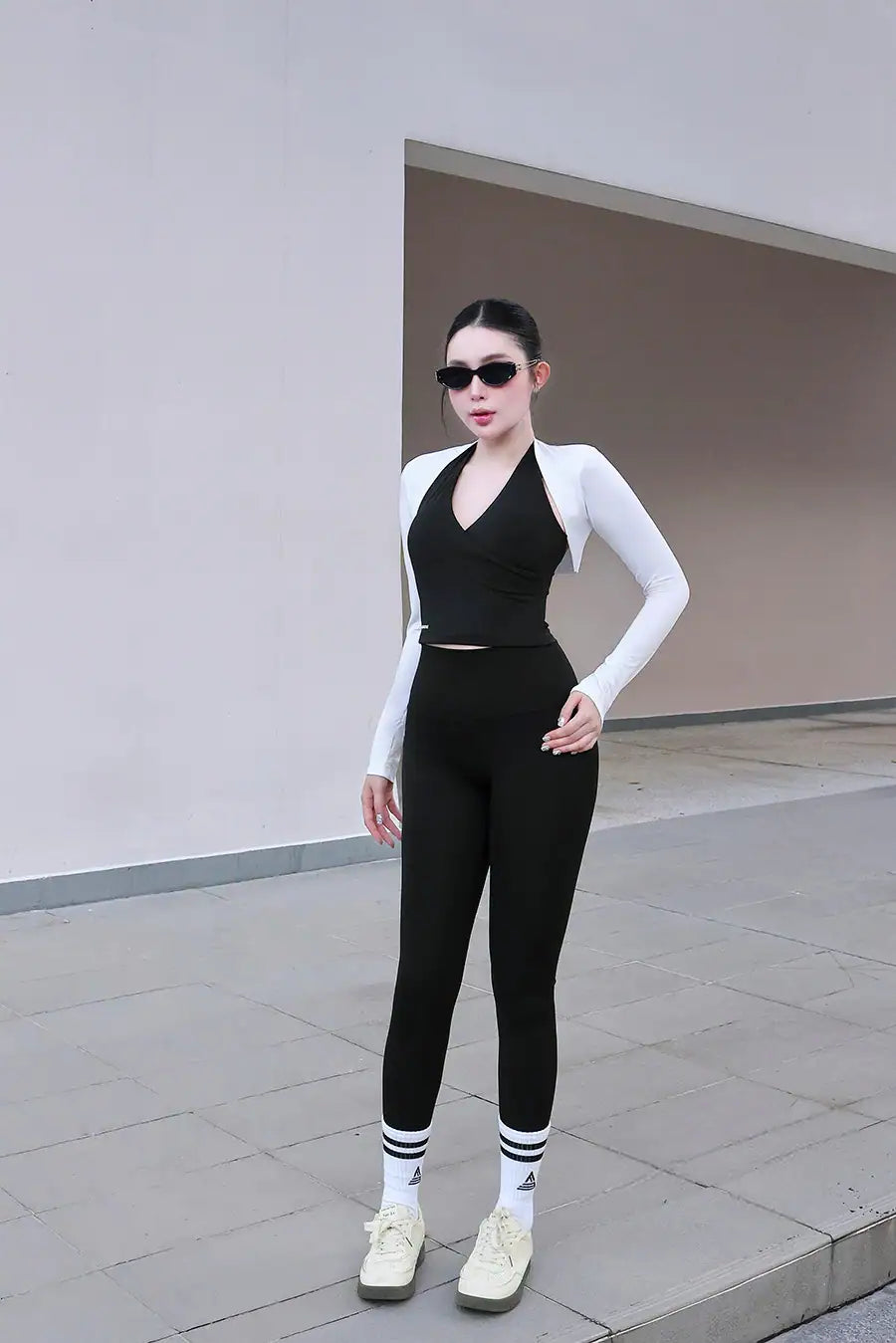
Pilates is an exercise method focusing on core strength and movement control, performed slowly and intentionally. It differs from yoga in that Pilates involves continuous movement with little static holding, focusing more on engaging the core than stretching. Beginners only need a mat to start, no reformer machine required.
What is Pilates?
Many women, when first hearing about Pilates, assume it is a gentler variation of yoga, primarily for stretching the body. This misconception leads to disappointment for many in their first session, as their abs start shaking after a few minutes without feeling any stretch at all.
The essence of Pilates lies in two words: control. Every movement is performed slowly, with a clear starting and ending point, and throughout the process, the core muscles — including deep abdominal muscles, pelvic floor, and lower back — must remain engaged to stabilize the torso. The arms and legs are merely the external moving parts; the core is where the real work happens.
Therefore, Pilates is not measured by weight or high repetition counts. It is measured by quality: can you keep your lower back pressed against the mat, are you breathing with the right rhythm, and are you letting your hips tilt to one side when fatigued? Six repetitions done correctly are more valuable than twenty done poorly. This is also why Pilates is suitable for those wanting to correct posture, office workers who sit for long hours, or those returning to exercise after a long break.
Stretching still occurs in Pilates, but it is a secondary result, not the goal. As the core strengthens and posture becomes straighter, a sense of openness and comfort in the body follows naturally.

How is Pilates different from yoga?
This is the question that makes most women hesitate to sign up for a class. Both disciplines are practiced on a mat, are slow-paced, and emphasize breathing — it's easy to get them mixed up from the outside. However, the goals and sensations during the sessions are quite different.
| Criteria | Pilates | Yoga |
|---|---|---|
| Main goal | Core strength and movement control | Flexibility, breathing, and mental relaxation |
| Session pace | Continuous movement, little static holding | Many static poses |
| Breathing method | Inhale through nose, exhale through mouth, keep core engaged | Usually even breathing through nose, abdomen relaxed |
| Basic equipment | Mat is enough; reformer machine is optional | Mat, potentially blocks and straps |
| Suited for | Engaging the core, correcting posture, gentle return to activity | Increasing flexibility and reducing stress |
| Sweat level | Low to moderate | Depends on the style, from very light to heavy |
In short: if your goal is a tighter stomach, less back pain, and a straighter stance, Pilates is closer to what you need. If you are stressed, sleeping poorly, and want a more supple body, yoga is more suitable. And there is absolutely no rule that says you must choose one. Many women alternate two Pilates sessions with one yoga session per week to have both a strong core and relaxation.
The apparel for both disciplines also shares major similarities; you can read more in our article how yoga wear differs from gym wear to understand why form-fitting clothes are important for mat-based disciplines.
Mat Pilates or Reformer — which should beginners choose?
The second question that often deters women is about machinery. Scrolling through social media, you see endless videos of people using a machine with springs and sliding carriages, and the cost of classes isn't low, so many assume that to do Pilates, you must have a machine.
The truth is no. Pilates has two main branches: mat Pilates using body weight, and reformer Pilates using a machine with a spring system to create resistance. Beginners should start with mat Pilates, as this is where you learn the foundational principles: how to activate the core, how to breathe correctly, and how to maintain a neutral spine. Without this foundation, getting on a machine too early only makes you rely on the springs and ignore the muscles that should be doing the work.
The reformer is an additional option for later stages, when you are accustomed to the movements and want to increase difficulty or change the training sensation. It's convenient and fun, but it's not a prerequisite for starting. A mat of moderate thickness laid out in your living room is enough for the first few months.
5 foundational Pilates exercises for your first session
The five exercises below are a classic framework, enough for you to get familiar with the feeling of core engagement without any equipment. Move slowly, breathe evenly, and stop if you feel lower back pain.
- The Hundred — Lie on your back, lift your head and shoulders off the mat, stretch your arms out and pump them up and down in rhythm with your breathing. Do 1 set, counting to 100 pumps. This is a classic warm-up to heat the core and establish a rhythmic breath.
- Roll Up — Lie on your back, lift your arms toward the ceiling, roll your body up vertebra by vertebra, then roll down the same way. Do 3 sets, 6 to 8 reps each. This exercise teaches you to control the spine rather than using momentum to pop up.
- Single Leg Stretch — Lie on your back, lift your head and shoulders, alternately pulling one knee toward your chest while the other leg extends. Do 3 sets, 10 reps per side. Keep your lower back pressed into the mat throughout the exercise.
- Bridge — Lie on your back with knees bent, feet close to your glutes, lift your hips to create a straight line from shoulders to knees. Do 3 sets, 12 reps each. This exercise targets the glutes and lower back, perfect for those who sit a lot.
- Swan Prep — Lie on your stomach, place hands under shoulders, gently lift your chest and keep your neck long, avoiding hyperextension. Do 3 sets, 8 reps each. This finishing exercise helps open the chest after working the front of the body.
If you want to add a static exercise to increase core endurance between Pilates sessions, check out our guide on how to perform planks correctly for women.

What to prepare for your first session
Mat. This is the only truly necessary investment. A Pilates mat should be slightly thicker than a yoga mat because many exercises involve lying on your back and rolling your spine directly on the floor; a thin mat will cause pain to the tailbone and spine.
Space. You need a space equal to your body length plus extra room for your arms at both ends. Choose a spot with a flat, non-slip floor, and avoid laying the mat too close to furniture legs as many exercises involve sudden leg extensions.
Breathing. Before the first session, practice the rhythm for a few minutes: inhale through your nose to expand the ribcage sideways, exhale through your mouth while gently engaging the lower abs as if pulling your navel toward your spine. Mastering this rhythm will make the entire session much easier.
Meals. Do not eat a large meal 1 to 2 hours before the session. Pilates involves many abdominal crunches and prone exercises; a full stomach will cause discomfort and make it hard to engage your core.
Attire. Choose form-fitting and highly elastic clothing so you can clearly see your body's movement lines and it's easier for the instructor to correct your posture. Tops should be well-fitted, not loose, as prone or inverted exercises will cause the shirt to slide down. You can choose a women's sports bra with moderate support, as Pilates does not have many jumping movements. For full details on criteria for choosing each item, read our dedicated article what to wear for Pilates.
How soon to see results and how often to practice
Two to three sessions per week, 30 to 40 minutes each, is a reasonable pace for beginners. Pilates requires high focus, so once you are so tired that you lose control of your posture, extending the session is no longer meaningful. Short, correct sessions are always better than long, sloppy ones.
In terms of feeling, the first thing to come is usually not physical appearance but body awareness: you notice your back feels less sore while sitting at work, you stand straighter naturally, and you realize you are engaging your abs even when not exercising. Visible changes in your waist and physique arrive more slowly and depend heavily on your diet, not just the exercise sessions.
To be blunt: Pilates is not a primary tool for weight loss. The energy expenditure in a session is moderate. If your goal is fat loss, pair Pilates with a calorie deficit of 300 to 500 kcal per day and about 150 minutes of moderate-intensity cardio per week — a safe speed is 0.3 to 0.5 kg per week. You can refer to our article on losing belly fat at home to create a complete schedule.
Finally, if during or after a session you feel sharp pain in your lower back, persistent neck pain, or numbness radiating down your legs, stop and see a doctor for a checkup; do not force yourself to continue. Muscle fatigue is normal; sharp pain is not.
Once you've chosen your rhythm, all that's left is to prepare an outfit that makes you feel comfortable every time you roll out your mat — you can browse all of Fitme's women's gym and yoga wear and leggings to choose.
Frequently Asked Questions
What is Pilates?
It is a method focusing on core strength and movement control, performed slowly and intentionally. Contrary to common belief, Pilates is not a stretching discipline — stretching is just a side effect.
How is Pilates different from yoga?
Pilates targets core strength and movement control; sessions involve continuous movement with little static holding. Yoga focuses more on flexibility, breathing, and mental relaxation, involving many poses held for long periods.
Do beginners need a reformer machine?
Not needed. Mat Pilates is sufficient to learn basic principles and build a core foundation. A reformer is an additional option once you are used to the movements, not a condition for starting.
How many times a week should I do Pilates?
Two to three sessions per week, 30 to 40 minutes each, is reasonable for beginners. Pilates requires focus, so short, correct sessions are more valuable than long, uncontrolled ones.
Does Pilates help with weight loss?
Pilates burns energy at a moderate level, so it is not a primary weight loss tool. It is most effective at engaging the core and improving posture; for fat loss, you need to combine it with a calorie deficit and cardio.



Leave a comment
This site is protected by hCaptcha and the hCaptcha Privacy Policy and Terms of Service apply.