




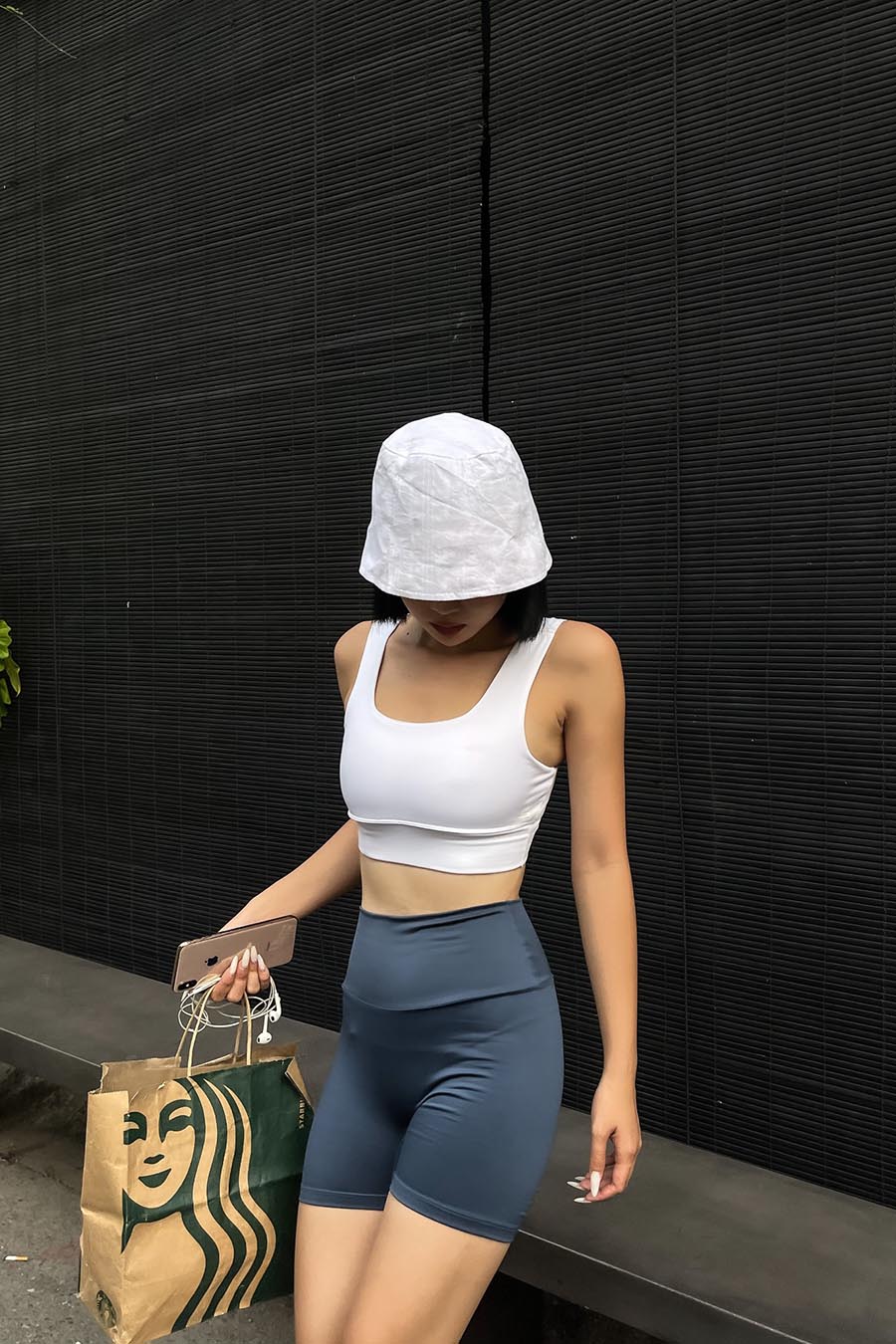
Training your shoulders correctly won't make them look bulky — on the contrary, it will make your physique look more toned. The feeling of having broad or "heavy" shoulders usually comes from a tightened upper trapezius, forward-rolling posture, and fat in the upper back area, rather than the shoulder muscles themselves. What you need to do is focus on training the side delts and rear delts correctly.
If you search for shoulder training on Google, almost all results are articles aimed at men: big shoulders, thick shoulders, "defined" shoulders. But most women looking for shoulder exercises have the exact opposite fear — fear of shoulders getting wide, looking "manly," or showing bulky muscles when wearing a tank top. Because of this fear, many people skip shoulder training entirely. That is an unfortunate decision, and this article will explain why. The same fear appears regarding thighs, and the article leg-toning exercises for women explains the same misunderstanding for the lower body.

Why shoulders look broad — and why it's usually not because of shoulder training
When looking in the mirror and seeing "bulky" shoulders, most women blame the shoulder muscles. In reality, three much more common culprits lie elsewhere.
1. Overdeveloped upper trapezius
The upper trapezius is the band of muscle running from the neck down to the shoulders. When this band is thick and tense, it fills the gap between the neck and shoulders, making the whole area look like one solid block — exactly the "bulky" feel you dislike. It thickens for two reasons: shrugging the shoulders toward the ears when lifting weights, and the habit of hunching over for long hours at a computer. Both are posture issues, not shoulder muscle issues.
2. Forward-rolling shoulder posture
Sitting for long periods and heavy phone use cause the chest to tighten and pull the shoulders forward. When shoulders roll forward, the upper back looks thicker from the side, the neck appears shorter, and the shoulders seem to protrude when viewed from the front. The body looks heavier even if the weight remains the same.
3. Fat deposits in the shoulder and upper back area
Fat accumulation on the upper back causes the shoulder contours to lose definition. The key point: there is no way to perform "spot reduction" on one specific area. Fat is lost across the entire body through a moderate caloric deficit of about 300-500 kcal per day and consistent physical activity, not by training or avoiding any specific muscle group.
Reversing the problem: training the side and rear delts correctly actually makes the shoulders look more toned. The reason lies in proportional proportions — when the curve of the shoulders is clear, the waist immediately looks smaller by comparison. Conversely, sloped shoulders without definition make the upper body look sluggish, and the waist loses its focal point. Avoiding shoulder training entirely is what actually makes the physique look stiff, not the other way around. This principle is identical to what was discussed in the article what is resistance training: muscles create shape, while fat creates bulk.
The three parts of the shoulder muscle and which ones to train
The shoulder muscle (deltoid) is not one single block. It has three heads, each responsible for a different direction of movement — and these three heads do not need to be treated equally.
The front delt is located at the front of the shoulder, responsible for pushing the arm forward and upward. This head is already trained quite a bit without you noticing: every push-up, chest press, plank, or push movement targets it. Therefore, there is almost no need for separate exercises for the front delt. Over-training this part contributes to pulling the shoulders further forward — exactly the posture that needs correcting.
The side delt is located at the top outer edge of the shoulder, responsible for the lateral raise movement. This is the head that creates width for the shoulders and is the least activated in daily life. For aesthetic goals, this is the most important head.
The rear delt is located at the back of the shoulder, responsible for pulling the arm backward. This head is almost completely neglected by office workers, and its weakness causes the shoulders to roll forward, leading to a hunched posture. Training the rear delt is the most direct way to correct forward-rolling shoulders.
In short: prioritize the side and rear delts, and let the front delt be trained as a secondary muscle. That is the formula for shoulders with definition without forward thickness.
Table of 5 shoulder exercises for women
The following five exercises are sufficient for a complete shoulder session, which can be done at home with a pair of light dumbbells and a resistance band. Rest 45-60 seconds between sets.
| Exercise | Targets | Sets × Reps | Effect on physique | Common mistakes |
|---|---|---|---|---|
| Lateral raise | Side delt | 3 × 12-15, light weight | Creates shoulder width, makes the waist look smaller by comparison | Shrugging shoulders, choosing weights that are too heavy |
| Rear delt fly | Rear delt | 3 × 12-15 | Pulls shoulders back, fights slouching | Arching the back, using momentum to swing |
| Face pull with resistance band | Rear delt and rotator cuffs | 3 × 15 | Corrects forward-rolling posture | Pulling the band too high, shrugging |
| Knee push-up | Front delt, chest, triceps | 3 × 8-10 | Upper body strength foundation | Sinking the hips |
| Wall slide | Shoulder joint mobility and posture | 3 × 10 | Opens the chest, aligns the shoulders | Arching the back to reach up |
If you have never lifted weights, you should start with wall slides and face pulls for the first two weeks to let the shoulder joints adapt to the range of motion, then add lateral raises. For more on warming up and maintaining a stable core, refer to the article correct planking for women.

Common mistakes that make shoulders bulky instead of toned
Shrugging while lifting weights. This is the number one mistake. When the weight is slightly heavy, the natural reflex is to shrug the shoulders up toward the ears to borrow strength from the traps. The result is that the upper traps do the work for the side delts — exactly the muscle group you don't want to grow. How to fix: before each set, drop your shoulder blades down and keep them there throughout the set, imagining you are tucking your shoulders into your back pockets.
Choosing weights that are too heavy. The side delt is a small muscle group. If the weight is too heavy, the body will sway, the shoulders will shrug, and the exercise turns into a trap workout. With lateral raises, the right weight is the one where you can perform 12-15 reps while keeping your shoulders lowered.
Only training the front delts. A routine consisting only of push-ups and chest presses will create imbalance: the front is strong, the back is weak, and the shoulders roll forward even more. For every pushing exercise, you should have at least one corresponding pulling exercise.
Ignoring posture outside the gym. A 40-minute workout session cannot overcome eight hours of hunching in front of a screen. Place your monitor at eye level, stand up, and stretch several times an hour — this contributes more than what you do in the gym.
How to schedule shoulder exercises into your weekly routine
Shoulders are a small muscle group and don't need a separate day. The neatest way is to attach them to the end of two upper-body sessions per week, choosing three out of the five exercises in the table each time, rotating them so they aren't exactly the same.
For example, a balanced week: Monday, upper body session with lateral raises and face pulls; Wednesday, light cardio; Friday, upper body session with rear delt flies and knee push-ups; in between, do wall slides as a warm-up for every session, even on rest days. Maintain about 150 minutes of moderate activity per week to support fat loss. You can find a more detailed schedule in the article gym training schedule for women, and check out home cardio sessions in the home cardio workout video.
Getting 7-9 hours of sleep is equally important: shoulder muscles recover quickly, but the shoulder joints and rotator cuffs need time. If your shoulders are sore after 48 hours, postpone your next session rather than forcing it.
What to wear when training shoulders
A shoulder session differs from other sessions in one respect: you need to see your shoulders. Almost all mistakes in this set of exercises — shrugging, uneven shoulders, arching the back — can be detected by eye in the mirror if the clothing doesn't cover your shoulders and shoulder blades.
Therefore, sports bras and sports tank tops are the most suitable choices. A bra leaves the shoulders bare to directly monitor shoulder lines and blade positions; a lightly fitted tank top is more discreet while still showing the movement.
One specific note for shoulder exercises: avoid shirts with straps that are too thick or stiff, as the straps will dig into the top of your shoulders right where the dumbbell passes during a lateral raise, causing you to unconsciously shrug your shoulders to avoid the pressure. Medium-width straps with soft, stretchy fabric will be much more comfortable. Fitme bras made from Buttery™ fabric (75% micro polyester and 25% spandex, 250-280 GSM) have a soft surface and flex with shoulder movement instead of binding.
The lower body is freer; just ensure it won't slip when you bend over for rear delt flies. You can see more outfit matching principles by workout type in women's gym and yoga wear or read the comparison article differences between yoga and gym wear to choose the right material for each type of session.
Frequently Asked Questions
Does shoulder training make women's shoulders look big?
Very unlikely. Women have much lower testosterone levels than men, so shoulder muscles grow very slowly and require intentional caloric surplus over a long period. The feeling of bulky shoulders usually comes from excessive upper trap tightening due to shrugging during training, not from the shoulder muscles themselves.
Why do my shoulders look broad and bulky even though I don't lift weights?
Usually due to three things: upper trap tension from the habit of hunching over while sitting, forward-rolling shoulder posture, and fat in the upper back area. None of these are resolved by avoiding shoulder training.
How many days a week should I train shoulders?
Two sessions per week is enough, integrated into upper body sessions. Shoulders are a small muscle group, so they recover quickly but are also easily overloaded if trained every day.
What can I use to train shoulders if I don't have weights?
Resistance bands are the best choice because they create resistance for all three parts of the shoulder. Knee push-ups and wall slides don't require any equipment.
What should I do if I have joint pain while training shoulders?
Stop the exercise that is causing pain and reduce the range of motion. Sharp pain in the joint when raising your arms is a sign you should seek medical advice rather than continuing to train, as it could be an issue with the rotator cuff muscles.


Leave a comment
This site is protected by hCaptcha and the hCaptcha Privacy Policy and Terms of Service apply.