




Thick thighs are not just one problem, but three different ones: subcutaneous fat, quadriceps developed due to incorrect weight distribution, and a heavy, tight sensation due to water retention. Misidentifying the cause makes it worse as you train, so before choosing exercises, you need to know which one you are dealing with.
Thick thighs due to fat, muscle, or water retention
Three causes lead to the same "my thighs are thick" feeling but are fundamentally different. The fastest way to distinguish them is by observing the softness of the tissue when pinched, the level of fluctuation throughout the day, and the area of fatigue after a workout.
| Cause | Identifying signs | Course of action |
|---|---|---|
| Subcutaneous fat | Thigh skin is soft, a thick layer can be pinched, measurements change little day-to-day | Moderate energy deficit combined with full-body resistance training; fat loss occurs across the entire body |
| Developed quadriceps | Thighs are firm when flexed, the area above the knee is prominent, thighs often feel sore/burning after workouts | Shift the force to the heels and hips, reduce quadriceps-dominant exercises, increase focus on glutes and hamstrings |
| Water retention & sedentary lifestyle | Sensation of heavy legs in the evening, better in the morning than at night, socks leave indentations | Stay active throughout the day, avoid sitting continuously for too long, prioritize walking and light rhythmic exercises |
Many women lump all three together and choose a solution for a problem they don't have: thighs thickening due to overused quads leads to more leg training sessions, while heavy legs from sitting all day leads to cutting food intake. Diagnose first, train later. If you are new to weight and resistance band training, read the article what is resistance training first.

The truth about spot reduction
Let’s be blunt: there is no such thing as spot reduction. The body does not shed fat from specific areas just because you want it to, so no single exercise will melt fat away from the thighs alone. Doing a lot of side leg raises will only tire the muscles there; it will not strip fat from the exact spot that feels the burn.
What training can actually change is the proportion of muscle in the glutes and hamstrings, your posture, and the feeling of firmness when flexing. Fat loss occurs throughout the body, following an individual order that no one can choose. Some see their face and arms slim down first, while thighs are the last area to change.
The correct framework is: a moderate energy deficit of about 300–500 kcal per day, a weight loss rate of 0.3–0.5 kg per week, plus full-body resistance training to maintain muscle. Losing weight faster usually results in muscle loss, and losing muscle is what makes legs look flabby instead of toned. Sleeping 7–9 hours every night is mandatory. If you are also concerned about the abdominal area, the principles are identical and already covered in the article fat loss for women at home.
Why the quadriceps get thicker during training
This is the most misunderstood part. Quadriceps thickening is usually not because you train too much, but because you apply force to the wrong area. In most lower-body exercises, if the center of gravity shifts to the front half of the foot and the knees push forward right from the first beat, the group bearing almost the entire load is the quadriceps, while the glutes and hamstrings are left out.
Three signs to recognize this: heels tend to lift when lowering, the quads burn right from the second set, and the next day, only the quads feel sore while the glutes feel nothing.
The fix lies in the sequence of movement: push the hips back first, bend the knees later, and keep the pressure downward through the middle of the foot toward the heel. When force travels through the heel, the posterior chain, including the glutes and hamstrings, is activated, and the quads return to a supportive role. Squat technique involves many details regarding depth and toe direction; read the article proper squatting for women.
Because of this, the glute group determines leg shape: when glutes become stronger, the quads have to carry less load. A specific training plan for the glutes is in the article glute exercises for women at home.

5 exercises for slender thighs
The five exercises below all push force toward the heels and hips and require no gym equipment; you can use two one-liter water bottles as weights.
1. Reverse Lunges — 3 sets × 10–12 reps per side. Stand straight, step one leg back, lower the back knee close to the floor, keep the front shin near vertical, then push through the front heel to stand up. Stepping back helps reduce pressure on the quads.
2. Romanian Deadlift — 3 sets × 10–12 reps. Feet hip-width apart, knees slightly bent, and maintain that bend throughout the move. Push your hips back to hinge forward; stop when you feel a stretch along the back of the thighs, then squeeze your glutes to bring your hips forward. This teaches the body to use the hips instead of the knees.
3. Glute Bridge — 3 sets × 12–15 reps. Lie on your back, knees bent, feet placed close to your glutes. Push through your heels to raise your hips, squeeze your glutes for 1–2 seconds at the peak, then lower with control. If you feel the quads working more than the glutes, move your feet closer to your glutes.
4. Step-ups — 3 sets × 8–10 reps per side. Use a chair or a step knee-high or lower. Place your entire foot on the step, push through the heel to lift yourself, and descend slowly using the other leg, without pushing off with the foot on the ground.
5. Side Lying Leg Raise — 3 sets × 12–15 reps per side. Lie on your side, body in a straight line, lift the top leg slowly and lower it slowly. This does not melt fat on the outer thigh; its real effect is to activate the gluteus medius to stabilize the hips during standing exercises.
Rest 45–60 seconds between sets. End the session with stretching, especially the hip flexors and quads, which often tighten from prolonged sitting — the sequence is in the article post-workout stretching for women.
How to integrate into your weekly schedule
Two to three lower-body sessions per week, with at least one day in between. Muscles need rest to recover; training the thigh area every day does not accelerate results but only causes accumulated fatigue, leading to quitting.
Additionally, maintain about 150 minutes of moderate-intensity activity per week, meaning your heart rate is 60–80% of your maximum heart rate (estimated by 220 minus your age). Brisk walking, cycling, and stair climbing all count. This part creates the energy deficit, while the five exercises above handle the muscle and shape.
A sample week: Monday lower body, Tuesday brisk walking, Wednesday rest, Thursday lower body, Friday rhythmic activity, weekend a long, light session. Stay consistent for a long enough time before evaluating.
Things that don't help
There are several things heavily advertised that have no impact on fat or muscle in the thighs:
- Hot wraps, waist trainers, thigh-slimming creams. The slimming sensation immediately after taking them off comes from temporary dehydration, not fat loss.
- "Fat-melting" massage. Massage helps relax muscles—that is its true value—but it is not a mechanism for reducing adipose tissue.
- Targeting one area continuously. Repeating thigh exercises every day only creates accumulated fatigue and usually thickens the quads if the weight distribution is still wrong.
- Extreme dieting. Cutting portions too low leads to muscle loss, making legs look softer rather than leaner, often ending in binge eating.
A health note: if leg swelling and pain persist, or if only one side is unusually swollen and hot/red, this is no longer a training matter. You should see a doctor to get checked by the right specialist.

What to wear for lower-body workouts
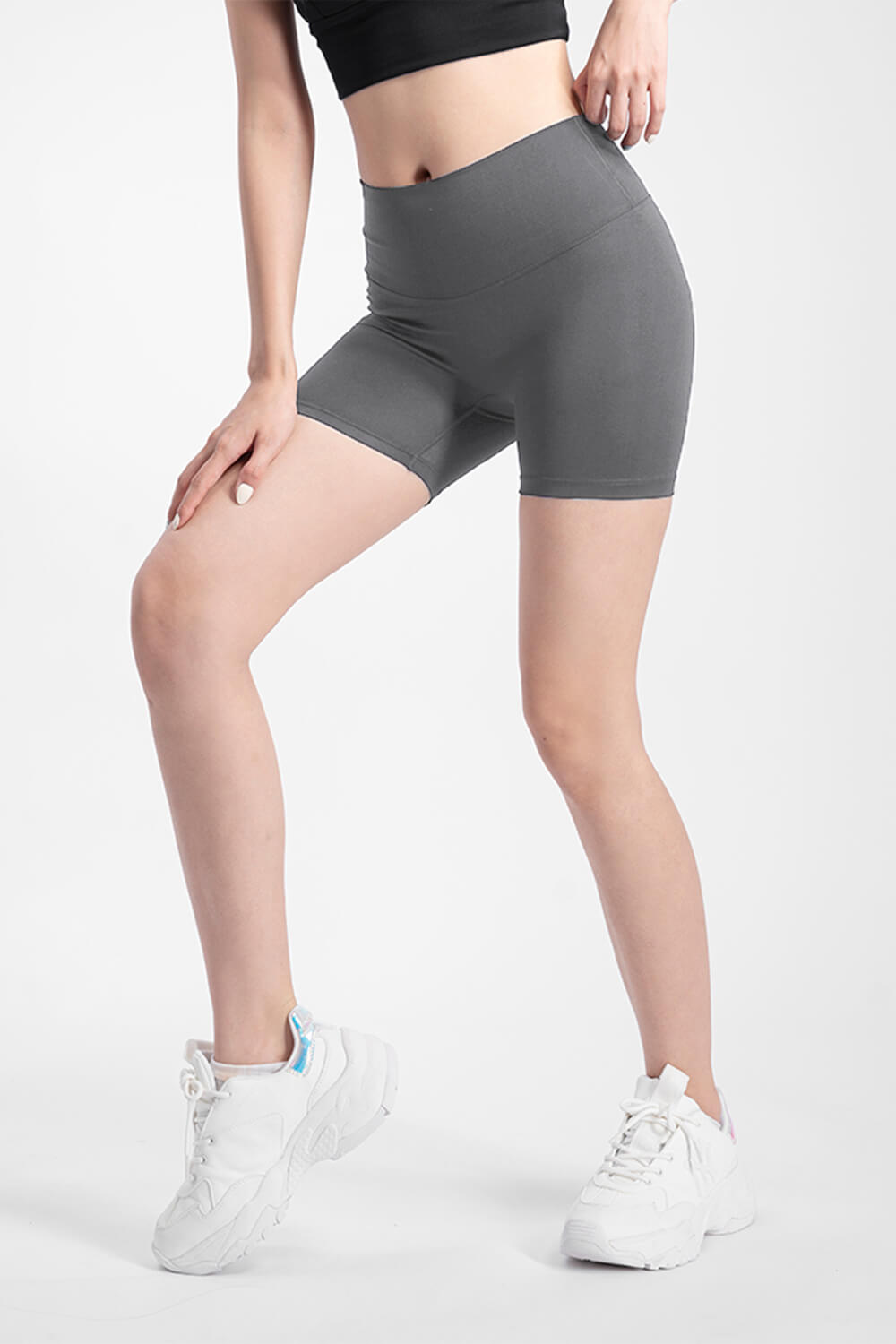
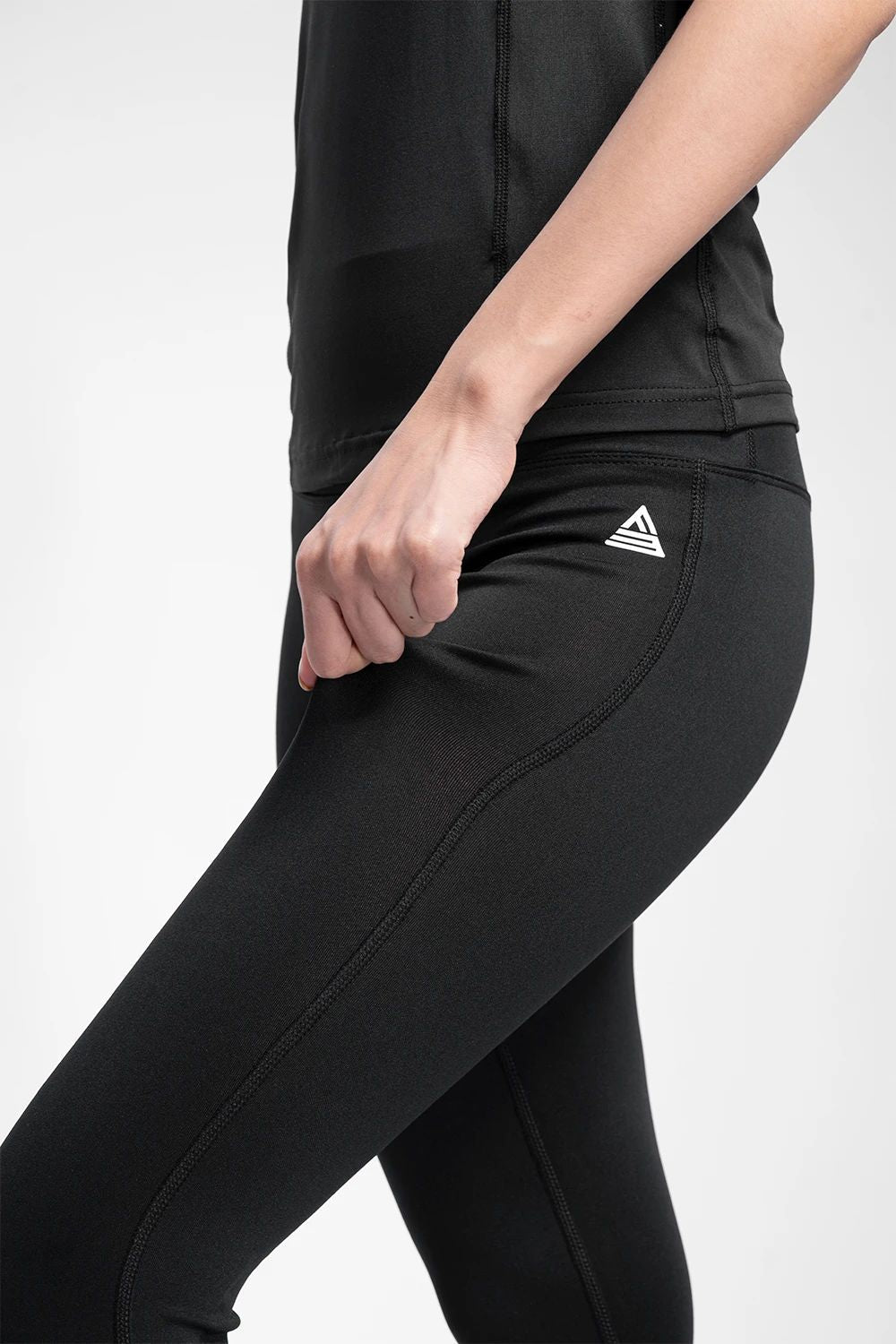
Lower-body workouts involve many deep squats and hip-opening movements, so your choice of pants determines whether you have the confidence to move through your full range of motion. Fitme leggings are made with a 2-layer triangular gusset and a 2-layer waistband; the triangular gusset disperses tension, so fabric doesn't bunch up in one spot when squatting deep.
The Buttery™ fabric line is 75% micro polyester + 25% spandex, weight 250–280 GSM — thick enough to be opaque when squatting, yet elastic enough to follow the rhythm of lunges and step-ups. As a factory that weaves its own fabric (F2C), Fitme can disclose the exact weight and blending ratio of each fabric type—something brands importing finished fabric usually just label as generic "polyester spandex". See more in the Buttery fabric collection.
Long leggings are suitable for air-conditioned gym sessions and kneeling exercises, while shorts are more breathable for hot days. Choose tops based on workout intensity; check out the sports bra group.
Regarding size, Fitme uses height and weight, not the lingerie-style three-circumference measurement method. Enter your height and weight into the Find Size button on the product page to get recommendations, or read the article how to choose women's legging sizes. After working out, wash at temperatures below 30°C to maintain the elasticity of the spandex fibers.
Frequently Asked Questions
Does leg training make thighs bigger?
For women, muscle grows slowly and requires a deliberate calorie surplus over a long period. Training consistently while eating at maintenance levels usually yields the opposite result: leaner legs. The feeling that thighs are getting bigger usually comes from incorrect weight distribution rather than the volume of training.
Are there exercises that target fat reduction on the thighs?
No. The body cannot reduce fat in specific, targeted areas, so no exercise will melt fat away from the thighs specifically. Training changes muscle proportion, posture, and firmness, while fat loss occurs throughout the entire body.
Why do my quads always burn after training?
That is a sign that the load is shifting into your quads instead of being distributed to your glutes and hamstrings. The cause is often bending the knees before pushing the hips back or shifting your center of gravity onto your toes during lower-body movements.
Does running make thighs bigger?
Running at moderate intensity does not make thighs bigger. The feeling of tightness in the thighs after starting running is usually a temporary reaction of the muscles as they adapt to a new load and will stabilize after a few weeks of consistent training.
How many sessions per week should I train my thighs?
2 to 3 sessions per week, at least one day apart, combined with about 150 minutes of moderate-intensity activity per week. Training the thigh area every day does not speed up results but only causes accumulated fatigue.


Leave a comment
This site is protected by hCaptcha and the hCaptcha Privacy Policy and Terms of Service apply.