




For post-workout stretching, use static stretching, holding each position for 20 to 30 seconds per side while your muscles are still warm; before your workout, use dynamic stretching instead of holding a static pose. This is where many women get it backwards, and doing so makes the workout both less effective and less comfortable.
This article does two things: it puts both types of stretching in their proper place in your routine, and provides a 6-move post-workout stretch sequence with specific hold times.
What is the difference between dynamic and static stretching
These two terms are often grouped together as "stretching," but they are two different activities that serve different purposes and belong at different points in your workout. Dynamic stretching involves movement, while static stretching involves holding a pose. Grasping this difference alone will correct most common mistakes.
| Criteria | Dynamic Stretching | Static Stretching |
|---|---|---|
| How to perform | Controlled movement through the full range of motion | Holding a single stretched position |
| When to use | Before a workout, after a light warm-up | After a workout, while muscles are warm |
| Duration | 8 to 12 repetitions per movement | Hold for 20 to 30 seconds per side |
| Goal | Warm up and open up range of motion for exercise | Relax and restore muscle length after exercise |
| Correct sensation | Gradually warming up, smoother joint movement | Pleasant tension, no sharp pain |
The logic lies in the objective: before a workout is to prepare your energy, and after a workout is to cool down. Since the two goals are opposites, the tools used must also be different.

Warming up is not stretching
A common sight at the gym: arriving, sitting on the floor, folding forward to hold a pose for several dozen seconds, and then jumping into a heavy workout. This is the most common mistake and also the easiest to fix.
Holding a static stretch for a long time right before exercising temporarily reduces muscle power—you’ve just weakened the exact muscle groups that are about to do heavy work. Save that for after your workout.
The correct sequence involves two steps. First, do a light five-minute warm-up: brisk walking, slow cycling, or marching in place until your body feels warm. Second, proceed to dynamic stretching, doing 8 to 12 repetitions for each move:
- Leg swings (front to back). Hold onto a wall for stability, and swing one leg forward and backward rhythmically, gradually increasing the range of motion rather than jerking hard from the first rep.
- Hip circles. Stand with feet shoulder-width apart, hands on hips, and rotate your hips in the largest circle you can control, then switch directions.
- Shoulder rolls and overhead reaches. Roll your shoulders back and then reach both arms up high, lowering them with your breath. Highly recommended if you sit at a desk all day.
If you have squats or heavy leg exercises that day, the dynamic stretch portion is even more important because your hip and ankle joints need the range of motion to get into proper form. For technique, see our article on proper squatting for women; for weekly scheduling, check out our gym workout schedule for women.
6 post-workout stretches and their order
The sequence below moves from large lower body muscle groups up to the upper body; following the correct order takes about seven to eight minutes.
| Order | Move | Target Area | Hold Time |
|---|---|---|---|
| 1 | Seated forward fold | Hamstrings and lower back | 30 seconds |
| 2 | Standing quad stretch | Quadriceps | 30 seconds per side |
| 3 | Seated pigeon pose | Hips and glutes | 30 seconds per side |
| 4 | Wall calf stretch | Calves and Achilles tendons | 30 seconds per side |
| 5 | Supine spinal twist | Lower back and hips | 30 seconds per side |
| 6 | Cross-body arm stretch | Shoulders and upper back | 20 seconds per side |
Move 1 — Seated forward fold. Sit on the floor with legs extended and toes pointing up. Keep your spine long, folding from the hip joints and bringing your chest toward your thighs instead of rounding your back to reach your toes. Stop wherever your hands naturally reach.
Move 2 — Standing quad stretch. Stand upright, hold a wall for support, and use the other hand to grab your ankle and pull the heel toward your glutes. Keep your knees close together, push your hips slightly forward, and do not lean back.
Move 3 — Seated pigeon pose. Bring one leg bent in front of you with the shin flat on the floor, and extend the other leg straight back. Keep both hips facing forward and sit tall; lower your torso only when you feel comfortable.
Move 4 — Wall calf stretch. Stand facing a wall, hands on the wall, step one foot back and press the heel into the floor, keeping the front knee slightly bent. You should feel the stretch running along the back of your lower leg.
Move 5 — Supine spinal twist. Lie on your back, arms extended to the sides. Bring one knee up and let it fall to the opposite side, looking in the opposite direction. Keep both shoulders pressed to the floor; do not force the knee to touch the ground.
Move 6 — Cross-body arm stretch. Bring one arm across your chest, use the other hand to support the elbow, and pull gently inward. Keep your shoulders low, not hunched up to your ears. This move feels best after pushing or pulling weight sessions.
Breathe steadily while holding; holding your breath is a sign that you are pushing too hard. On days you train your lower body heavily, hold an extra set for moves 2 and 3—the two areas under the most load during at-home glute exercises and thigh-toning exercises.

The correct sensation during stretching
Stretching is not a flexibility contest. No one is grading whether your hands can touch your toes, and forcing a deeper stretch does not equal faster progress.
The correct sensation is a pleasant tension, the kind where you can still breathe steadily and talk normally. If you find yourself gritting your teeth or holding your breath to maintain the position, you have exceeded your limit. Sharp pain, shooting pain, or a tingling sensation like electricity down your legs are signals to stop immediately.
Three principles for a safe practice: enter the position slowly instead of bouncing, do not compare your range of motion to others, and accept that your range today may be different from yesterday. If pain persists for days, occurs even at rest, or is accompanied by swelling, see a doctor.
What stretching cannot do
I’m being blunt here because there are too many rumors surrounding this. Dull muscle soreness that appears one to two days after a heavy workout or a new routine is a normal phenomenon, and stretching cannot eliminate it.
Stretching helps you relax after a workout and restores range of motion after muscle groups have contracted repeatedly. That is a real benefit and well worth the final seven minutes of your session. But giving it the ability to make tomorrow's soreness disappear is incorrect.
What truly helps the body acclimate to intensity is gradual progression week by week, getting seven to nine hours of sleep, and eating enough nutrients. Yoga and Pilates for beginners are two great low-impact exercise options for recovery days, but that is a topic for another article.
Stretching on rest days and when sitting a lot
You can stretch on days you don't train, which is especially useful for those who sit at a desk all day. The only condition: do not stretch while your muscles are cold. Walk in place or walk up and down stairs for a few minutes to warm up your body before assuming the position.
For those who sit a lot, three priority areas are the hips, quadriceps, and upper back—corresponding to moves 2, 3, and 6 in the sequence above. Just about three minutes in the middle of the afternoon will feel much better than sitting straight through until evening.
What to wear for comfortable stretching
Stretching occurs in poses where workout clothes are most likely to show weaknesses: folding forward, deep knee bends, twisting.
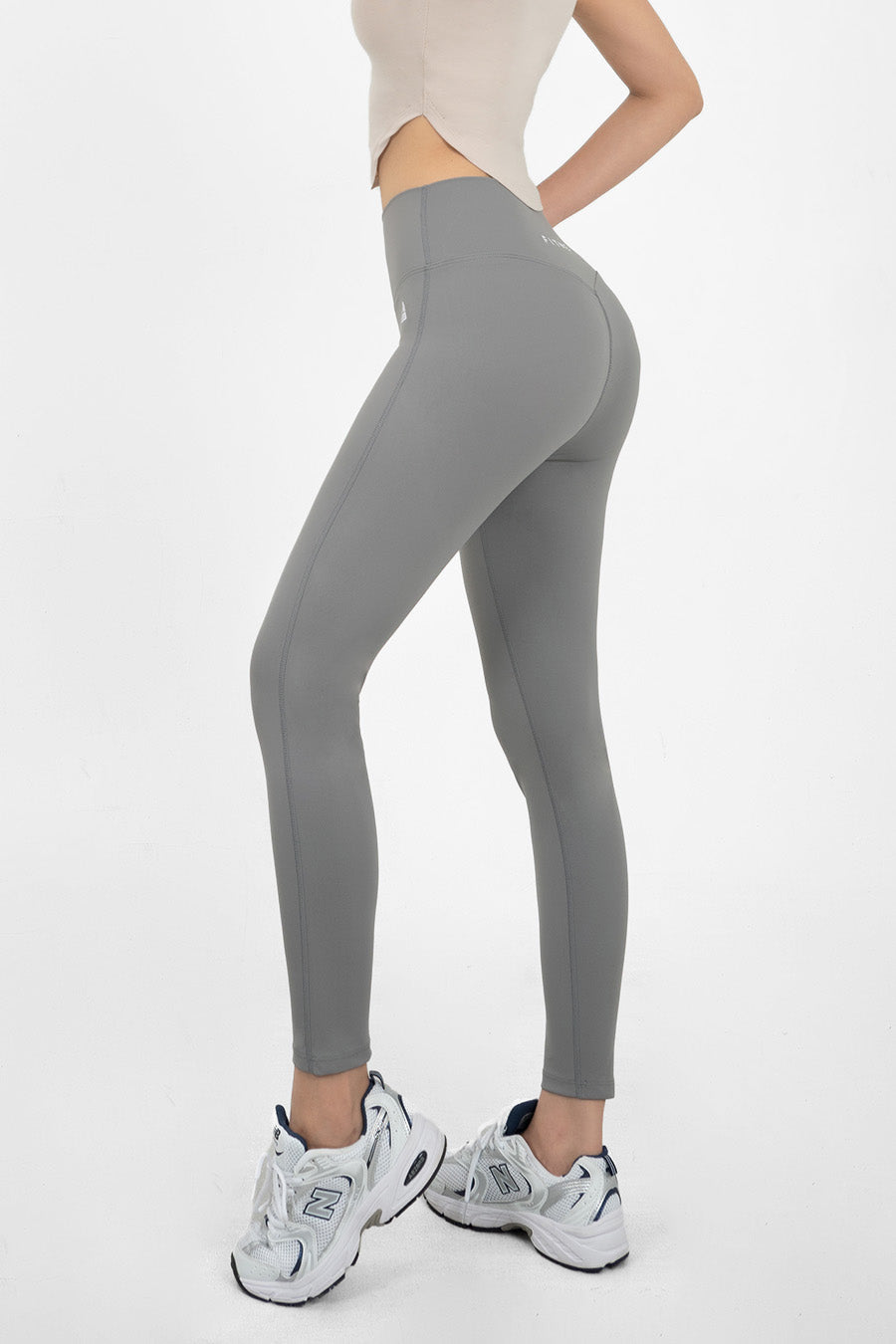
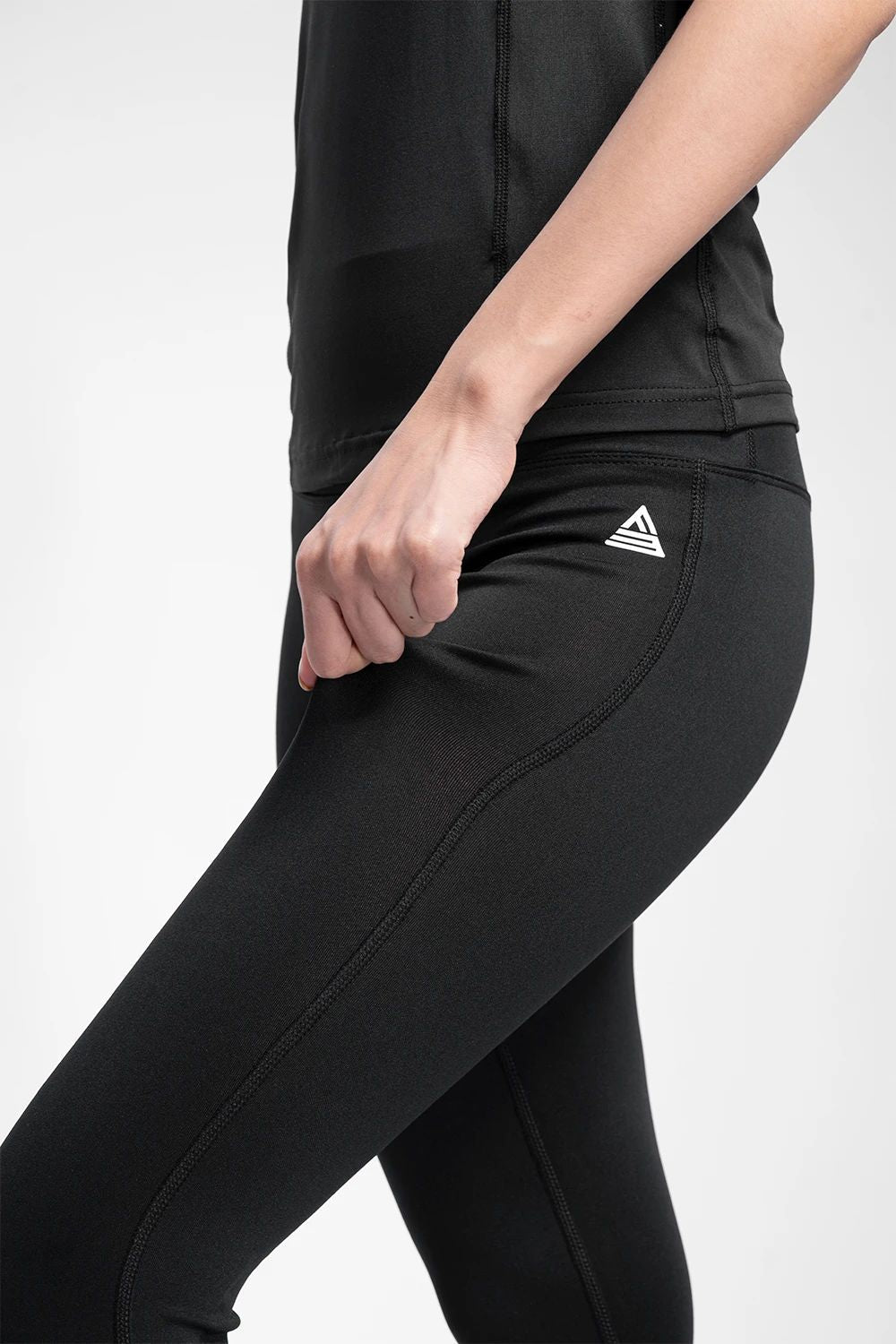
For leggings, the areas to pay attention to are the waistband and the gusset. Fitme leggings feature a 2-layer triangular gusset and a 2-layer waistband; the triangular gusset dissipates tension, so in seated folds or pigeon poses, the fabric doesn't concentrate all the stress on a single seam. The Buttery™ material is 75% micro polyester + 25% spandex, 250–280 GSM—this density is thick enough to be opaque when bending while remaining soft.
As a factory-to-consumer (F2C) brand, Fitme discloses the exact weight and blend ratio of every fabric—something brands that import finished fabric usually just label as generic "polyester spandex." You can view our entire collection of women's leggings or choose a full set in our women's gym and yoga wear.
For the top, prioritize pieces that have a moderate fit and don't ride up when lying down and twisting. Styles in our yoga tops collection often use the Essential line, which is thinner and lighter, perfect for low-intensity sessions and the final cool-down; if your main workout involves running or jumping, choose according to the guide in our sports bras category. Regarding size, instead of measuring yourself, just enter your height and weight into the Find My Size button right on the product page.

Frequently Asked Questions
Should I stretch before or after exercising?
Before a workout, use dynamic stretching—controlled movement through the full range of motion. After a workout, use static stretching—holding a fixed pose while the muscles are still warm. Holding a static stretch for a long time right before a workout is the most common mistake.
How long should I hold each stretch?
20 to 30 seconds per side is a reasonable range for post-workout static stretching. Holding for less time may not allow the muscle to relax, while holding for much longer does not provide significant additional benefits.
Does stretching eliminate soreness after a workout?
It does not eliminate it completely. Dull soreness for one to two days after a heavy workout is a normal bodily reaction. Stretching helps relax and regain range of motion, but it cannot erase that soreness.
Should I push through if I feel sharp pain while stretching?
No. The correct sensation when stretching is pleasant tension. Sharp pain is a signal to stop, not a sign of progress. If pain persists or radiates down your legs, see a doctor instead of continuing to exercise.
Do I need to stretch on rest days?
You can do light stretching on rest days, especially if you sit a lot. You should warm up your body for a few minutes by walking in place first, because stretching when muscles are cold can easily cause discomfort.


Leave a comment
This site is protected by hCaptcha and the hCaptcha Privacy Policy and Terms of Service apply.