




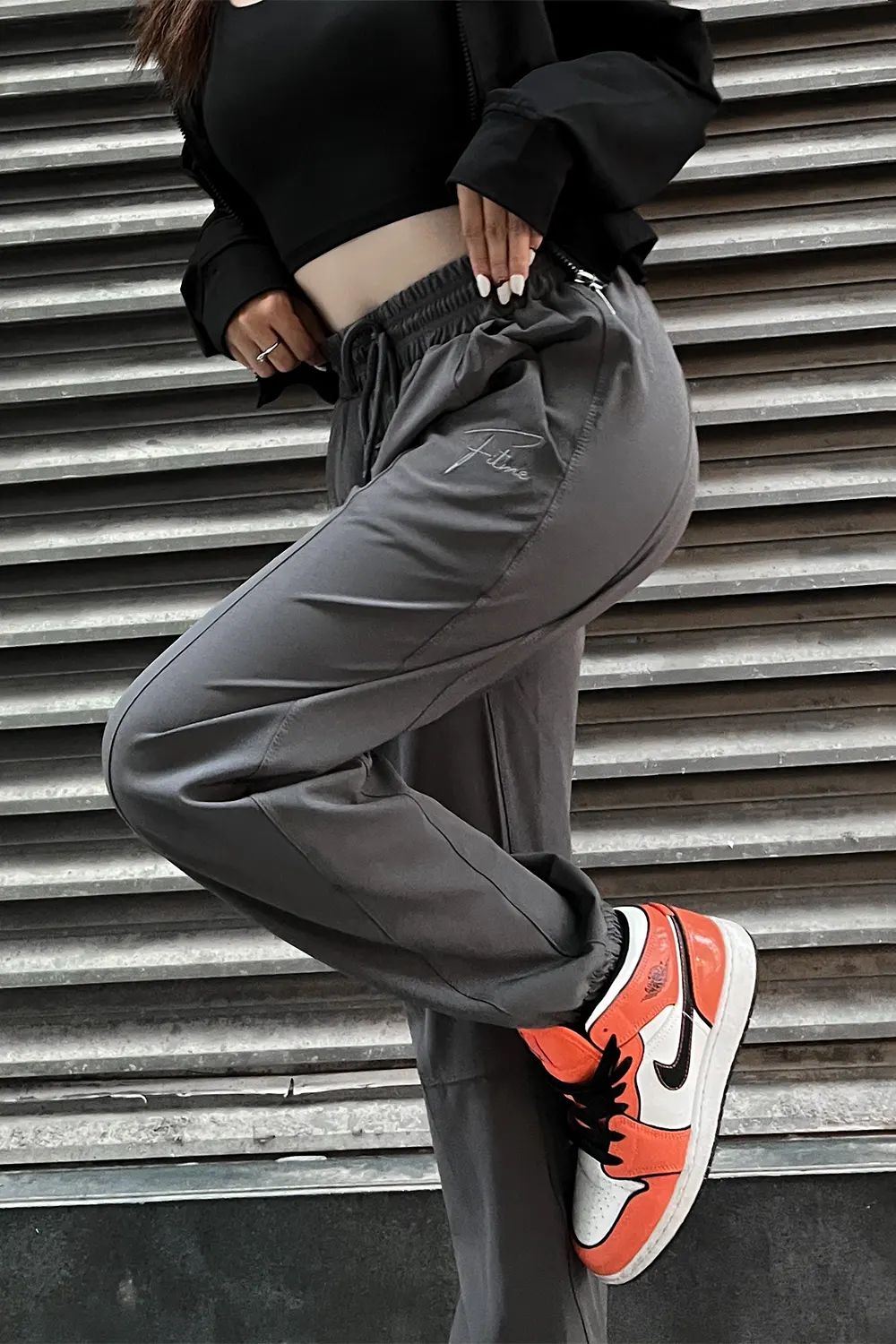
You can grow your glutes at home without weights, provided that the tension actually reaches the glute muscles. The routine below consists of 6 exercises, packs into 20 minutes, is performed 3 sessions per week, and always begins with 3 to 5 minutes of glute activation. That activation step is exactly what makes the difference.
Many women train consistently for months on end without seeing any change in their glutes, then conclude that they aren't training enough. In reality, it's usually the opposite: there is no shortage of sessions, it's just that the glutes are barely participating in the workout.
Why your glutes won't grow despite training
The glutes are the largest muscle group in the body, but they are also the group most prone to "sleeping" in those who sit a lot. Sitting for continuous hours keeps the glutes in a compressed state and rarely calls them into action. Over time, the body forms a movement habit: whenever it needs to push the body up, it prioritizes using the quads and lower back, while the glutes sit on the sidelines.
That habit does not disappear on its own when you enter a workout. You do lunges, step-ups, and glute bridges — but the muscles controlling the movement are still the quads and lower back. As a result, the workout is still tiring, you're still sore the next day, but the soreness is in your quads or lower back, not your glutes. That is the clearest sign that the force is being misdirected.
When you feel your quads burning more than your glutes after a session, don't rush to change your routine — the problem lies in the direction of force, not the list of exercises. If you are concerned that your thighs are developing in an undesirable way, a separate analysis is provided in the article slimming thigh exercises for women.

Glute activation before training
This is the most important part of the entire article, and also the one most frequently skipped. The goal of 3 to 5 minutes of activation is not to burn calories or warm up the body — it is simply to create a clear sensation of tension in the glutes before starting the main set. Once the glutes are "awake," the subsequent exercises will naturally channel the force to the right place.
Perform the following three exercises slowly and lightly; there is no need for heavy breathing:
- Static Glute Bridge: Lie on your back, bend your knees, push your hips up, and hold the peak position for 20 to 30 seconds. While holding, actively squeeze your glutes rather than letting your hips hang via your lower back. Do 2 rounds.
- Clamshells: Lie on your side, knees bent and stacked, and open the top knee like a clam shell while keeping your feet touching. Keep your hips from tilting backward. Do 15 reps per side, slowly.
- Slow Donkey Kicks: Get into a quadruped position, kick one leg back and up, and pause for a beat at the highest point. Do not use momentum, and do not arch your back. Do 12 reps per side.
After these three exercises, you should feel your glutes slightly warm and lightly fatigued. If you don't feel anything yet, do another round before starting the main routine — if you skip this step, the rest of the workout will repeat the same old mistakes.
20-minute workout for one session
The routine consists of 6 exercises, rest 45 to 60 seconds between sets, and finish one exercise before moving to the next. No weights are needed, just a mat and a sturdy chair or step.
| Order | Exercise | Sets × Reps | Execution Notes |
|---|---|---|---|
| 1 | Glute Bridge | 3 × 15 | Pause 2 seconds at the top, squeeze glutes before lowering |
| 2 | Single-leg Glute Bridge | 3 × 10 per side | Keep hips level, don't let the non-working side sag |
| 3 | Step-ups | 3 × 12 per side | Drive force through the heel on the platform, don't push off the ground |
| 4 | Reverse Lunges | 3 × 10 per side | Stepping back helps reduce pressure on the knees compared to stepping forward |
| 5 | Donkey Kicks | 3 × 15 per side | Kick slowly, do not arch your back for range |
| 6 | Fire Hydrants | 3 × 15 per side | Keep torso stable, only the hip should move |
You will notice that this routine does not include squats. Squats are still great for the glutes, but they require perfect form in the hips, knees, and ankles for the force to target the glutes instead of all going into the quads — and that is a topic long enough to be addressed separately. Read the article how to squat correctly for women thoroughly before adding them to this routine.
How to schedule 3 sessions a week
Three sessions per week, with at least one day in between each. The easiest pattern to maintain is Monday — Wednesday — Friday, or Tuesday — Thursday — Sunday. On the days in between, you don't need to lie still: walking or climbing stairs will help reduce the feeling of muscle stiffness.
The glutes are a large muscle group that needs recovery time to grow. Training glutes seven days in a row often leads to cumulative fatigue rather than faster results. If you are still too sore from the previous session to maintain form, delay the next session by another day.
If you want to integrate this routine into a total-body plan that includes upper-body work, refer to our gym training schedule for women. There is also a separate guide for cool-down and stretching after the workout; see post-workout stretching for women to follow the correct sequence.

How to increase intensity at home without weights
Muscles only grow when they are demanded to do more than the previous time. In the gym, you increase the demand by adding weight. At home without weights, you still have four other ways — and all four are effective if applied with intention rather than just finishing the rep count.
| Method of Overload | How to do it | When to use |
|---|---|---|
| Increase time under tension | Lower over a count of 3 instead of 1 | When reps feel easy but you aren't ready to increase reps |
| Pause at the peak | Hold for 2–3 seconds at the point of maximum contraction | When you cannot clearly feel your glutes |
| Switch to single-leg | Do the one-sided version of the same movement | When 15 reps on two legs still feel light |
| Shorten rest time | Decrease from 60 seconds to 30 seconds between sets | When you want to increase difficulty without changing moves |
Rule: only change one variable at a time. If you increase the lowering tempo this week, keep the rest time the same; next week, if you reduce the rest time, keep the tempo the same. Changing multiple things at once will make it impossible to know which factor is working, and it's also easy to overload.
Common mistakes that ruin your workout
Arching your back for range. During donkey kicks and fire hydrants, when your leg can't go any higher, the natural reflex is to arch your lower back to make your leg look higher. Any added range then comes from the spine, not the hip. It is better to kick lower and keep the back flat.
Kicking quickly with momentum. Doing reps fast just to finish them causes momentum to take on most of the work. Glutes only experience real tension when the movement is controlled on both the way up and the way down.
Pushing with the toes. During step-ups and lunges, if the point of contact is the toes, the quads will take over. Shift the weight to the heel of the working leg, imagining you are pushing the floor away.
Ignoring recovery. Getting 7–9 hours of sleep and eating enough protein is work that happens outside of the session, but it determines the majority of the results. Specifically, if you experience sharp pain in your knees or lower back that lasts for many days, do not try to keep training — see a doctor to get properly checked by a professional.
If you want to add an exercise to keep your core more stable when doing single-leg glute bridges, refer to how to plank correctly for women.
What to wear when working out at home
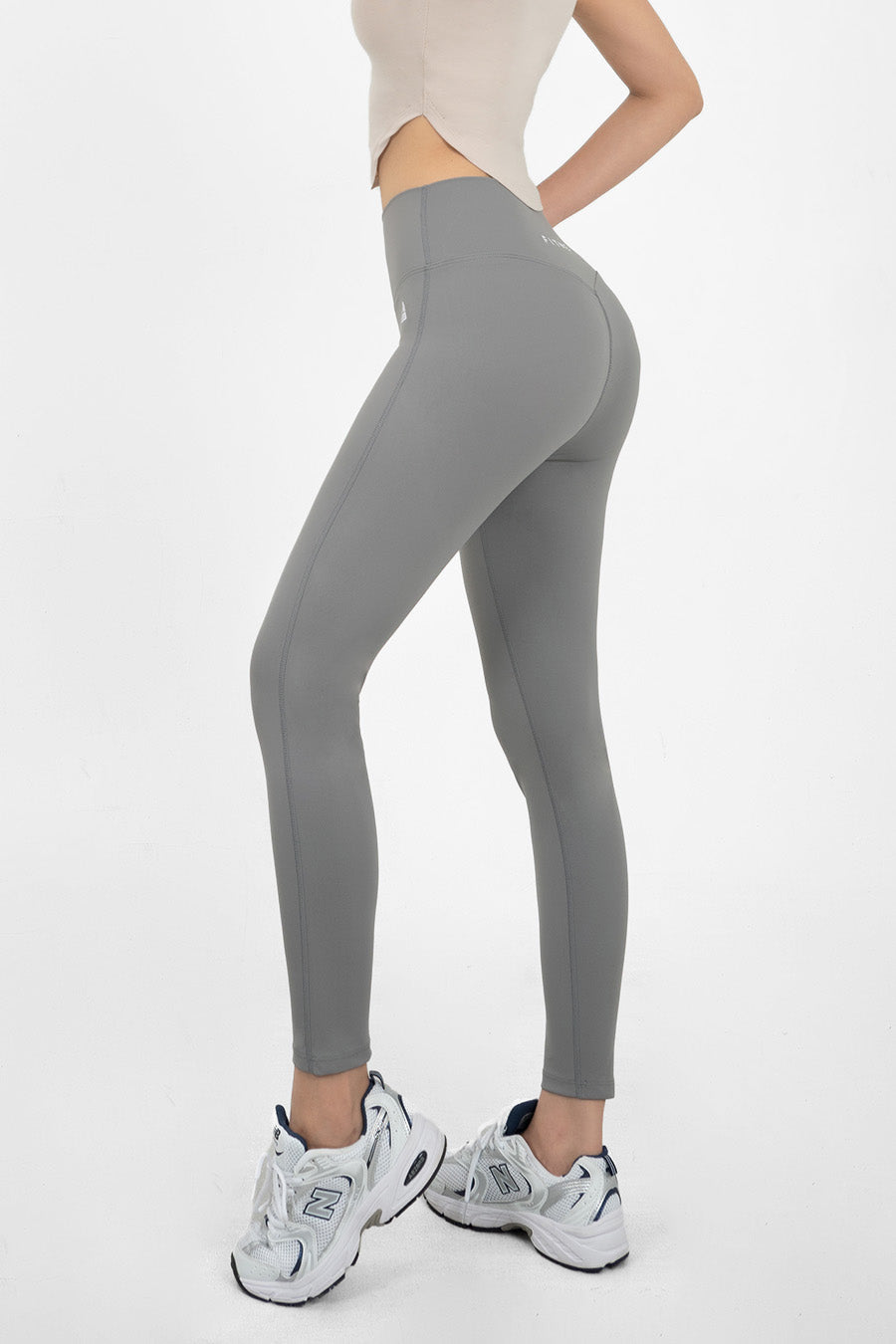
Training at home doesn't require fancy gear, but there are two things that directly affect your session. First, your pants must stay put when you push your hips up — a waistband slipping during every glute bridge will break your rhythm and cause you to lose the contraction sensation. Second, the fabric needs to be thick enough so it isn't see-through when you are in a quadruped position.
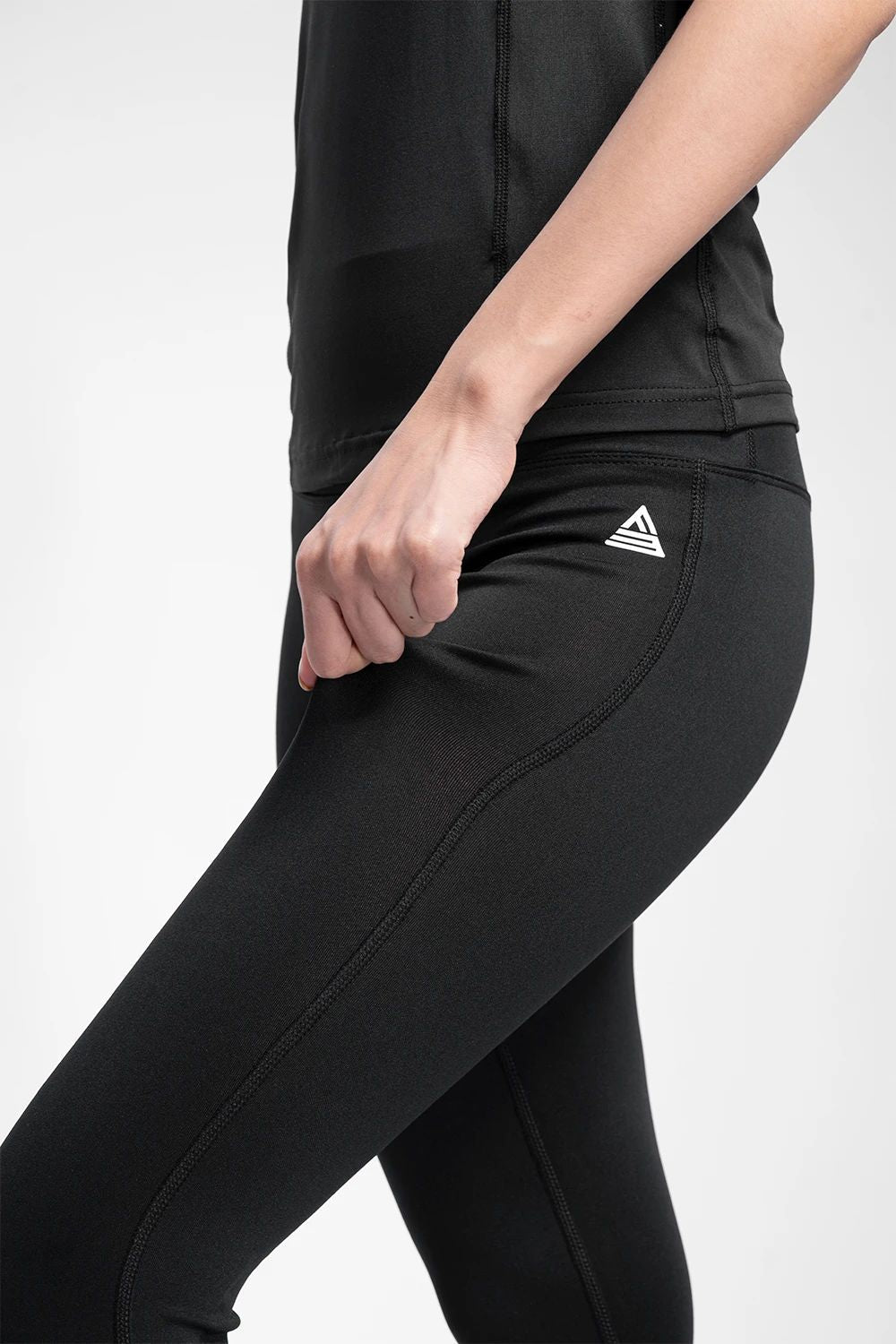
Our line of high-waisted leggings handles both of these issues. In Fitme's Buttery fabric line, the composition is 75% micro polyester + 25% spandex, with a density of 250–280 GSM — thick enough to be opaque while still stretching with your hips. Fitme leggings use a 2-layer triangular gusset to help disperse tension in the areas under the most stress, along with a 2-layer waistband so that the band grips rather than slips.
As a manufacturer that weaves its own fabric (F2C), Fitme can disclose the exact density and blend ratio of each fabric type — something that brands importing finished fabric usually label generally as just "polyester spandex." For tops, choose from our sports bras with medium support; that is enough, as this routine contains no jumping exercises. To see the full curated outfits, visit our gym and yoga wear for women page.
For size selection, enter your height and weight into the Find Size button right on the product page — the system will return the appropriate size for that specific model.

Frequently Asked Questions
Is training glutes at home without weights effective?
Yes, provided that you increase the load over time. Bodyweight is enough in the beginning; after that, increase the difficulty by lowering more slowly, pausing at the top, switching to single-leg exercises, or shortening your rest time.
Why do my glutes not grow despite training?
It is usually because the force is not actually reaching the glutes. Those who sit a lot have glutes that are rarely activated, so the body uses the quads and lower back to carry the load instead. Spending 3 to 5 minutes activating your glutes before the workout will noticeably change the feeling during the exercise.
How many days a week should I train glutes?
3 sessions per week, with at least one day in between. Glutes are a large muscle group and need recovery time; training continuously every day often leads to cumulative fatigue rather than faster results.
Does training glutes make my thighs bigger?
If you feel burning in your quads but not your glutes, it is a sign that the force is being misdirected, not that the exercise is wrong. Adjusting the force push point to your heels and hips will bring the sensation back to the right place.
How long until I see a change?
There is no universal timeline for everyone. The earliest changes are usually feeling stronger when climbing stairs and standing up or sitting down, before you see any difference in shape.


Leave a comment
This site is protected by hCaptcha and the hCaptcha Privacy Policy and Terms of Service apply.