




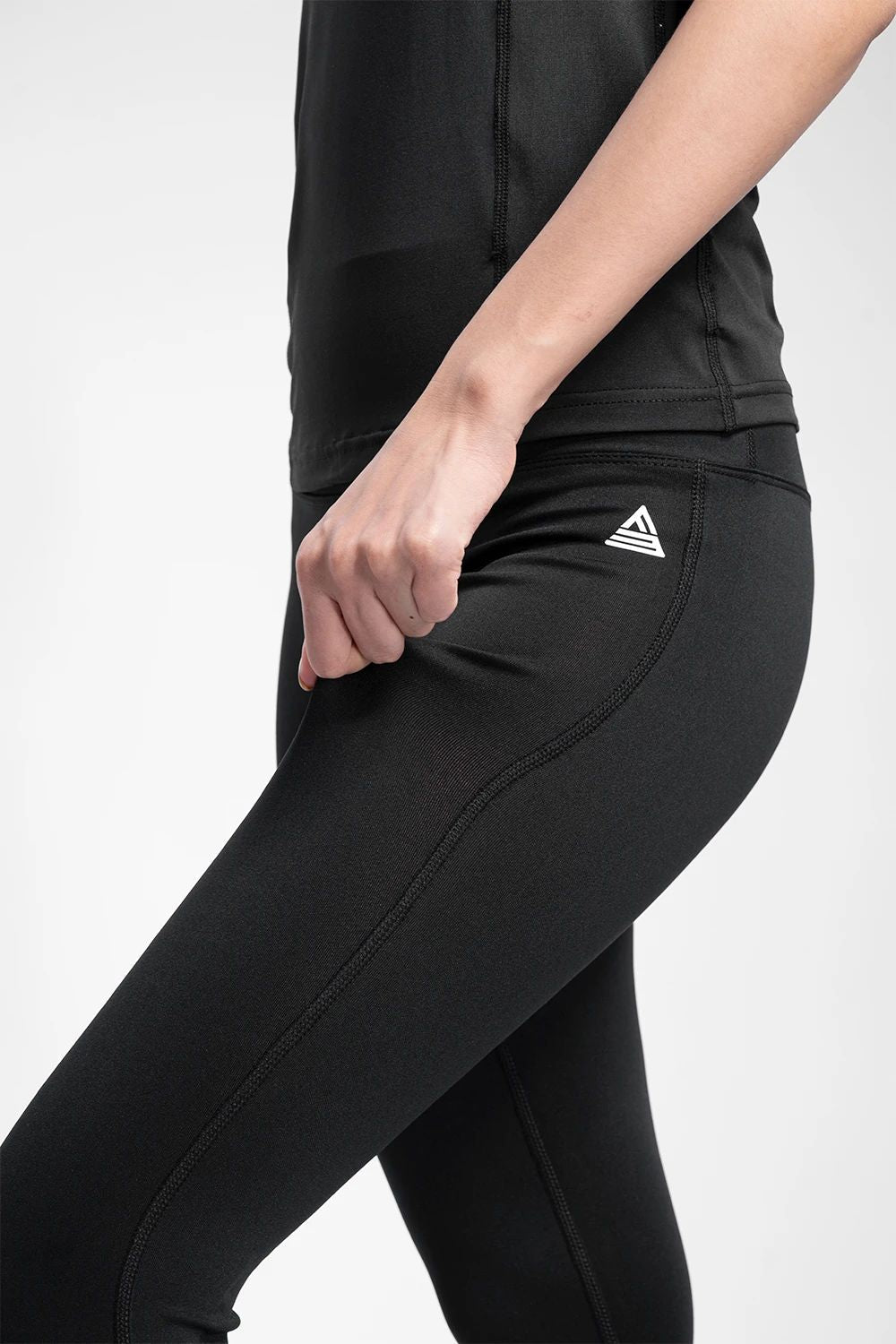
Proper squatting for women begins with pushing the hips back before bending the knees, keeping the chest open and the spine neutral, lowering to a depth you can control, and then pushing through your heels to stand back up. If you finish your workout and only your quads are sore while your glutes feel nothing, the problem lies in the movement sequence, not the weight.
What is a proper squat
A squat is a movement where the hips and knees bend simultaneously to lower your body and then stand back up. It sounds simple, but most mistakes lie in the order: the hips must initiate the movement first, followed by the knees. Reversing this order is when the quads take on all the work.
The standard sequence for a single squat:
- Preparation stance: feet shoulder-width apart or slightly wider, toes turned slightly outward, with weight evenly distributed across the entire foot. You should feel all three contact points—the heel, the ball of the big toe, and the ball of the little toe—gripping the floor.
- Descending: inhale, tighten your core slightly as if preparing for a light nudge, push your hips back first, and then allow your knees to bend. Your knees should track in the same direction as your toes, without caving inward.
- At the bottom: pause for a half-beat. Keep your chest open, maintain the natural curve of your lower back, and look straight ahead without straining your neck.
- Standing up: exhale, push the floor away through your heels, with your hips and chest rising at the same rhythm. Lock out slightly at the top by squeezing your glutes, without arching your back.
Simple breathing pattern: inhale while lowering, exhale while pushing up. You do not need to hold your breath when using light weights or body weight.

Why only your quads feel sore after squatting
Incorrect squatting usually doesn't cause immediate pain—it just silently shifts the workload to other muscle groups. The body is very good at completing tasks in the easiest way possible. When your hips don't open backward, your quads and knees take on the bulk of the load; the movement is still "completed," but the glutes are barely involved.
Therefore, the most reliable sign isn't in a photo of your posture, but in how you feel after the workout:
- Quads are burning, glutes feel nothing for one to two days later ⇒ force is being applied in the wrong place.
- A warm, tired sensation spreading through the glutes and hamstrings ⇒ the hips are engaged.
- Dull ache in the lower back, different from muscle fatigue ⇒ your back is compensating for the hips; you need to reduce the depth.
Three common causes leading to the first situation: bending the knees before pushing the hips, shifting the center of gravity to the toes, and descending too quickly, leading to a loss of control at the bottom. All three can be fixed by slowing down, not by doing more.
As for the fear that squats make thighs bulky, the short answer is this: bodyweight and moderate-weight squats primarily tone the muscles, and the "bulky thigh" feeling immediately after a workout is mostly due to temporary blood flow. If you want to dive deeper into this, read our article on toning exercises for women.
Self-check test without a mirror
Not everyone has a large mirror or someone to help record them. Here is a test you can do right at home with just a sturdy chair:
- Step 1: place a chair behind you, stand one foot's length in front of it.
- Step 2: fold your arms across your chest, push your hips back, and sit lightly onto the edge of the chair.
- Step 3: stand up without using momentum, no rocking, no pushing off with your hands.
How to read the results: if you have to lunge your body forward to get up, your hips are not engaged and the force is running through your quads. If you can stand up while keeping your torso relatively upright and your heels on the floor, your hip-to-knee sequence is correct.
Perform this test 5 times before every leg day. It is both a check and a warm-up exercise to remind your body of the correct path for force.
5 common squat mistakes and how to fix them
The table below is organized by signs you can identify yourself, without needing a trainer standing by:
| Mistake | Signs you can identify | How to fix |
|---|---|---|
| Knees cave inward | Knees pull together while standing up, inner thighs feel abnormally tired | Proactively push knees outward, tracking with your toes throughout the movement |
| Heels lift off the floor | Torso leans forward, weight shifts to the balls of your feet | Stand slightly wider, turn toes out, and reduce depth until heels stay grounded |
| Lower back rounds at the bottom | Dull lower back pain after the workout, not glute fatigue | Stop at the depth where you can maintain a neutral spine; tighten your core before descending |
| Leaning too far forward | Quads burn, glutes feel nothing | Keep chest open, push hips back before bending the knees |
| Standing up using momentum | Exploding up quickly, loss of control midway | Lower over 2 counts, pause for a half-beat at the bottom, stand up in 1 count |
Fix one mistake at a time; don't try to fix all five at once. Choose the one with the clearest signs, practice with body weight until it feels natural, then move on to the next. If you experience sharp pain in the lower back or knees that lasts for many days, stop and seek medical advice instead of pushing through it.

How deep is deep enough
Depth is not a competition. Everyone has different hip structures and ankle flexibility, so the "thighs parallel to the floor" benchmark might fit one person but be too deep for another.
The correct stopping point is the point where you can still maintain a neutral spine. When you go past that point, the pelvis begins to tilt under—a phenomenon known as "butt wink"—and the load shifts from the hips to the lower back. That is the moment the movement stops serving its original goal.
Two safe ways to increase depth: stand wider and turn your toes out more to give your hips room to open, or improve your ankle flexibility first, and the depth will come naturally. Relaxation and stretching after your workout can be found in our guide on post-workout stretching for women.
Squat variations by skill level
The four variations below are in increasing order of difficulty; only move up a level when you have mastered the form of the previous one:
- Box squat — for your first week. Sit down until you lightly touch the edge of a chair, then stand up. The chair acts as a fixed depth marker. 3 sets x 10 reps.
- Bodyweight squat — remove the chair, maintain the depth you are accustomed to. 3 sets x 12 reps, lower over 2 counts.
- Goblet squat — hold a dumbbell or water bottle in front of your chest. The weight in front helps keep your chest open more naturally. 3 sets x 10 reps.
- Sumo squat — stand much wider, turn toes out clearly, focusing on the inner thighs and glutes. 3 sets x 12 reps.
Rest about one to two minutes between sets, and aim for 2 to 3 squat sessions per week. Squats are just one link in the chain; if you want a lower-body program including hip thrusts and glute bridges, check out our article on home glute exercises for women. If you want to understand why resistance training is the foundation for every fitness goal, read our post on what resistance training is and incorporate it into a gym workout plan for women.
What to wear for a comfortable squat
Squatting stretches fabric in your most sensitive areas: the crotch and the waistband. The wrong pair of leggings will have you constantly adjusting instead of focusing on your hips and heels.
Three points to check when choosing leggings for squats:
- Crotch construction: Fitme leggings use a double-layered triangular gusset. This triangular structure distributes tension in multiple directions instead of concentrating it on a single seam—exactly what you need when squatting deep.
- Waistband: A double-layered waistband maintains its shape when the hips are deeply flexed, preventing the waistband from sliding down mid-set.
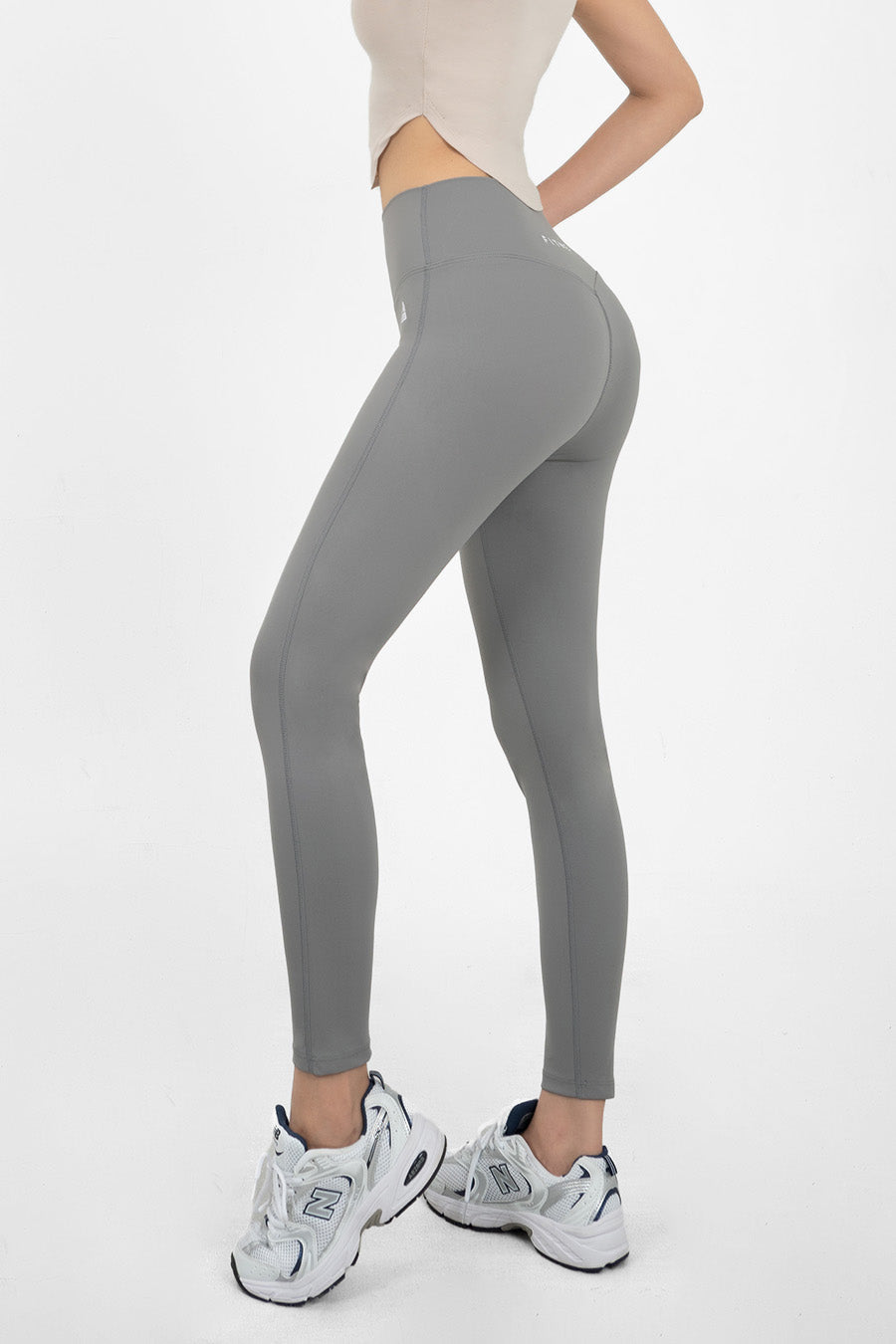
- Fabric: Our Buttery™ line is 75% micro polyester + 25% spandex, 250–280 GSM—thick enough to be squat-proof while still stretching with your movements.
As an F2C (factory-to-consumer) brand, Fitme can disclose the exact weight and blend ratio of every fabric—something brands that source finished fabric often describe vaguely as "polyester spandex."

For your top, a sports bra with sufficient support will keep your upper body stable as you engage your core. If you need to choose pants based on your height, take a look at our high-waisted leggings and refer to our legging selection guide. Regarding sizing, don't just measure your proportions—enter your height and weight into the Find Size button on the product page, and the system will suggest the correct size chart for that specific model.
Frequently Asked Questions
What is a proper squat for women?
Stand shoulder-width apart or slightly wider, toes turned slightly out, push your hips back before bending your knees, keep your chest open and spine neutral, lower to a controllable depth, and push through your heels to stand up.
Why do my quads get sore but my glutes feel nothing?
This is a sign that the force is shifting to your quads instead of your hips. Common causes are bending the knees before pushing the hips back or shifting your weight onto your toes. Start the movement by pushing your hips back and driving force through your heels as you rise.
How deep should I squat?
Squat until you can no longer maintain a neutral spine. The depth depends on your individual ankle and hip flexibility and is not a universal marker for everyone.
How many sets should a beginner do per session?
3 sets of 10 to 12 repetitions with body weight is a reasonable starting point. Only add weight when you can maintain proper form through the final rep of the last set for two consecutive sessions.
Can I squat every day?
It is not necessary. Lower body muscle groups need recovery time, so 2 to 3 sessions per week is enough for beginners. Training every day often leads to cumulative fatigue and degradation of form.


Leave a comment
This site is protected by hCaptcha and the hCaptcha Privacy Policy and Terms of Service apply.