




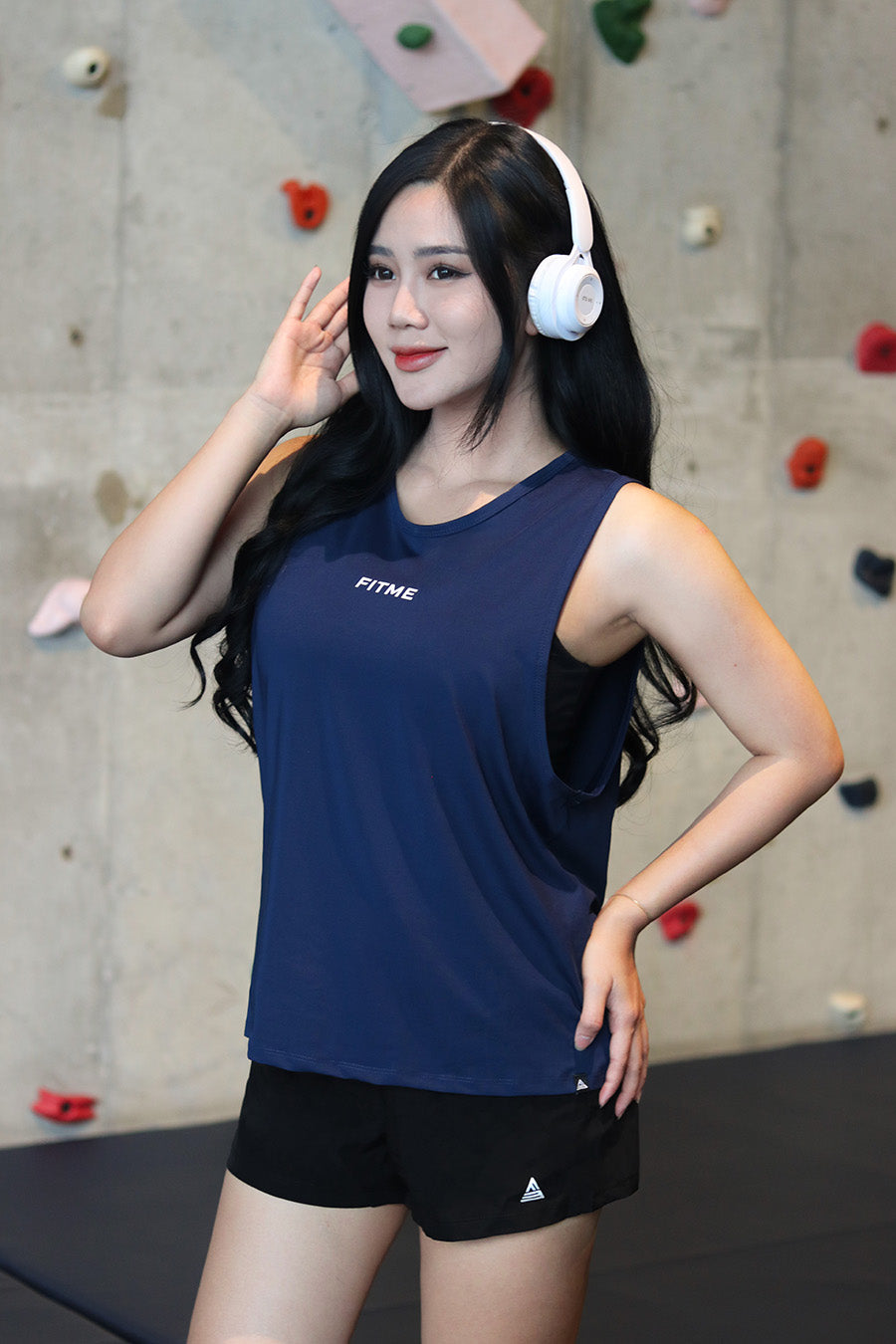
The best gym workout plan for women is the one you can stick to consistently, not the one with the most sessions. Beginners should start with 3 sessions per week for the first 4 to 8 weeks, then increase to 5 sessions once the body has adjusted to the rhythm. Two detailed plans are provided below.
Most gym workout plans circulating online are translated from men’s routines. They are typically split into push, pull, and leg days, assuming the trainee has five to six free slots per week and a gym fully equipped with machines. For a woman juggling work and household chores, such plans look good on paper but usually fall apart by the second week. This article offers two versions so you can choose based on your actual availability, rather than the level of determination you felt on the evening you signed up for your gym membership.
Should you choose 3 or 5 sessions?
This question shouldn't be answered based on your goals, but on your lifestyle. Look back at the past four weeks and count how many sessions in your busiest week you truly had at least an hour and a half of free time, including travel and showering. Use the number from your busiest week, not your freest one. That is the number of sessions your schedule can accommodate.
Choose the 3-session plan if you work full-time with overtime, have young children, or are returning to exercise after a long break. Choose the 5-session plan if you have been training consistently for at least eight weeks, no longer experience prolonged soreness after each session, and your personal schedule is stable enough that you don't have to cancel frequently.
The key point is this: people rarely quit because the workout plan was wrong. They quit because they overcommitted, missed a few sessions, felt like they had failed their plan, and gave up entirely. A 3-session plan maintained for six months yields much better results than a 5-session plan maintained for three weeks. You can always increase your frequency later, but you cannot regain lost momentum.

3-session weekly plan (for the busy woman)
These three sessions are divided by major muscle groups so that each area is targeted throughout the week while allowing for sufficient recovery days. You can schedule these on Monday, Wednesday, and Friday, or any three days with gaps in between, as long as the order remains the same. The lower-body session revolves around squats, so if you are unsure about your form, please review how to squat correctly for women before increasing the weight.
| Session | Focus | Key Exercises | Duration |
|---|---|---|---|
| Session 1 | Lower body | Squats · lunges · glute bridges · calf raises | 45 minutes |
| Session 2 | Upper body + Core | Knee push-ups · resistance band rows · overhead press · planks | 40 minutes |
| Session 3 | Full body + Cardio | Full-body circuit followed by 15 mins of cardio | 45 minutes |
Note: Rest at least 1 day between sessions.
For each key exercise, perform 3 sets of 10 to 12 repetitions with a weight that allows you to maintain proper form until the last rep. For planks, hold for 20 to 40 seconds per set and prioritize a straight back over a longer hold time. If you are unsure about your technique, check out our guide on how to plank correctly for women before increasing your time.
Session 3 is the most flexible. If the gym is crowded or you only have forty minutes, keep the full-body circuit and cut the cardio. Conversely, if you are still sore from Session 1, turn the entire session into light cardio and stretching as an active recovery day.
5-session weekly plan (once you've found your rhythm)
Once your body is accustomed to the load, breaking down muscle groups allows you to focus more deeply on each area while keeping sessions under an hour. The plan below alternates between lower and upper body so that no muscle group works hard two days in a row. For the glute and hamstring session, if you can't make it to the gym, you can maintain your rhythm with at-home glute exercises for women.
| Session | Focus | Key Exercises | Duration |
|---|---|---|---|
| Session 1 | Glutes & Hamstrings | Hip thrusts · Romanian deadlifts · single-leg glute bridges | 50 minutes |
| Session 2 | Upper Body Push | Chest press · overhead press · push-ups | 45 minutes |
| Session 3 | Cardio & Core | 25 mins cardio + 10 mins core circuit | 40 minutes |
| Session 4 | Quads & Calves | Squats · forward lunges · calf raises | 50 minutes |
| Session 5 | Upper Body Pull + Back | Lat pulldowns · dumbbell rows · resistance band pulls | 45 minutes |
Session 3 is placed in the middle of the week for a reason. It is lighter than the other four sessions and serves as an active recovery, helping you finish the week without accumulating fatigue. If you are busy, this is the first session you should skip, as missing it has the least impact on your progress. To understand why resistance training takes up more sessions than cardio in both plans, read our article on what resistance training is.
Session duration and rest
The main workout should be contained within 40 to 50 minutes, plus 5 to 10 minutes of warm-up and a few minutes of stretching afterward. A two-hour session is almost always a sign of resting too long between sets or using your phone during the workout, not because you are doing more work than others.
Regarding rest between sets, use the following benchmarks: For heavy compound movements like squats, hip thrusts, or Romanian deadlifts, rest for 90 seconds to 2 minutes to have enough strength to maintain form in the next set. For lighter exercises like shoulder presses, rows, or glute bridges, 45 to 60 seconds is sufficient. For core circuits and cardio, rest 30 seconds between movements.
The total amount of cardio for the week, across both plans, should aim for approximately 150 minutes of moderate intensity. Moderate intensity means your heart rate falls between 60 to 80 percent of your maximum heart rate (calculated as 220 minus your age), equivalent to a level where you can speak in short sentences but cannot sing. If you need specific exercise suggestions for days you can't get to the gym, refer to this at-home cardio video.
When and how to increase the load
The signs for increasing load are simple: when you complete the required number of sets and repetitions at your current weight for two consecutive sessions while maintaining good form on the final rep, it’s time to level up. You don't need to wait until the end of the month or any cycle.
A safe way to increase is to change only one variable at a time. You can increase the weight by the smallest increment available at your gym, add one set, or add two reps to each set; don't do all three at once. When increasing weight, accept that your reps may drop for the first session or two before gradually climbing back up; this is a normal process.
If your goal is fat loss, remember that a reasonable rate is 0.3 to 0.5 kg per week, accompanied by a moderate deficit of about 300 to 500 kcal per day and 7 to 9 hours of sleep. Increasing load in the gym while sleep-deprived and under-eating means your body lacks the resources to recover, resulting in accumulated fatigue rather than increased strength.
A health note: lingering muscle soreness one to two days after a heavy session is normal. However, if you feel sharp pain in your joints, pain lasting over a week, or swelling in joint areas, stop that exercise and see a doctor instead of pushing through.
What to do if you miss a session
This is the section almost no plan covers, yet it is the real reason why people quit entirely. You don't quit because of the missed session; you quit because of the feeling that your plan has failed afterward.
The short principle: if you miss a session, let it go and pick up with the next scheduled session. Do not cram two sessions into one day, and do not lengthen the next session to make up for it. Doubling up increases the risk of injury and provides no additional benefits.
If you miss one session during the week, consider it a "lite" version of that week and stick to the regular schedule for the following week. If you miss two consecutive sessions, set up a short 20-minute session consisting only of basic exercises; the sole purpose is to get back into the habit, not to hit a specific volume. If you take a break for more than two weeks, return to the 3-session plan and reduce the weight by one increment for the first week, even if you were previously doing 5 sessions.
And if you find that you miss sessions consistently at the same time each week, the problem isn't your willpower—the problem is that the time slot was never truly free. Change the time slot or scale down to a lower frequency. A smaller schedule that fits your actual life will always beat a "perfect" schedule that breaks every week.

What to wear to the gym
Workout clothes don't make the workout better, but the wrong clothes can cut a session short very quickly. For a plan with many lower-body sessions like the two above, what you need first is a pair of women's leggings that don't slip during hip thrusts and aren't see-through when squatting deep. Fitme leggings use Buttery fabric consisting of 75% micro-polyester and 25% spandex, with a density of 250 to 280 GSM, double-layered waistbands, and double-layered gussets, so you won't have to pull or adjust them mid-set.
For the upper body, choose a women's sports bra that fits snugly, doesn't chafe your shoulders, and provides enough support for sessions with cardio and light jumping. Bras that are too loose make you self-conscious during jumping exercises, while bras that are too tight can leave you feeling short of breath during heavy sets.
If you are shopping from scratch, the most economical way is to buy in sets from our women's gym and yoga wear collection: two leggings and two bras are enough to rotate for a 3-session schedule; three leggings and three bras for a 5-session schedule. Regarding size, Fitme selects based on height and weight, with bras additionally accounting for bust size, so follow the size chart for each product rather than guessing based on your everyday clothing size.
Frequently Asked Questions
How many days a week should a beginner go to the gym?
3 sessions are enough for the first 4 to 8 weeks. The body needs time to get used to the load and technique; doing 5 sessions right from the start often leads to prolonged soreness and quitting halfway.
Will women get bulky from lifting weights?
It is very difficult. Women have much lower testosterone levels than men, so muscle growth is slow and requires intentional calorie surpluses over a long period. Training consistently while eating at maintenance results in the opposite: looking toned at the same weight.
How long should a gym session last?
40 to 50 minutes for the main workout is enough. Sessions lasting over 75 minutes are usually due to resting too long between sets, not doing more work.
Do I have to do makeup workouts if I miss a session?
No makeup workouts are necessary. Skip the missed session and continue with the next one on the schedule. Cramming two sessions into one day increases the risk of injury and provides no additional benefits.
How long until I see results?
About 6 to 8 weeks of consistent training. The first signs are usually feeling stronger and clothes fitting better, while the scale may not change because muscle is denser than fat at the same volume.




Leave a comment
This site is protected by hCaptcha and the hCaptcha Privacy Policy and Terms of Service apply.